Who owns what.
Kylian Mbappé has ended nearly twenty years with Nike for a Swiss company that is reported to be paying him partly in its own shares. Sadio Mané is putting about $20m of what he says is his own money into a mango plant in the village where he was born. Barcelona reported record revenue of €1.06bn and negative equity of €168m on the same morning, then approved another €510m of borrowing. Chelsea changed hands at a £5bn valuation, and the men selling are barely in profit. Arsenal, the champions, have hired consultants to review their costs and one executive to own their revenue. And prosecutors in Rome are asking whether a campaign to make Lazio’s owner sell moved the club’s share price.
Mbappé left Nike after nearly twenty years. The new deal pays him in shares.
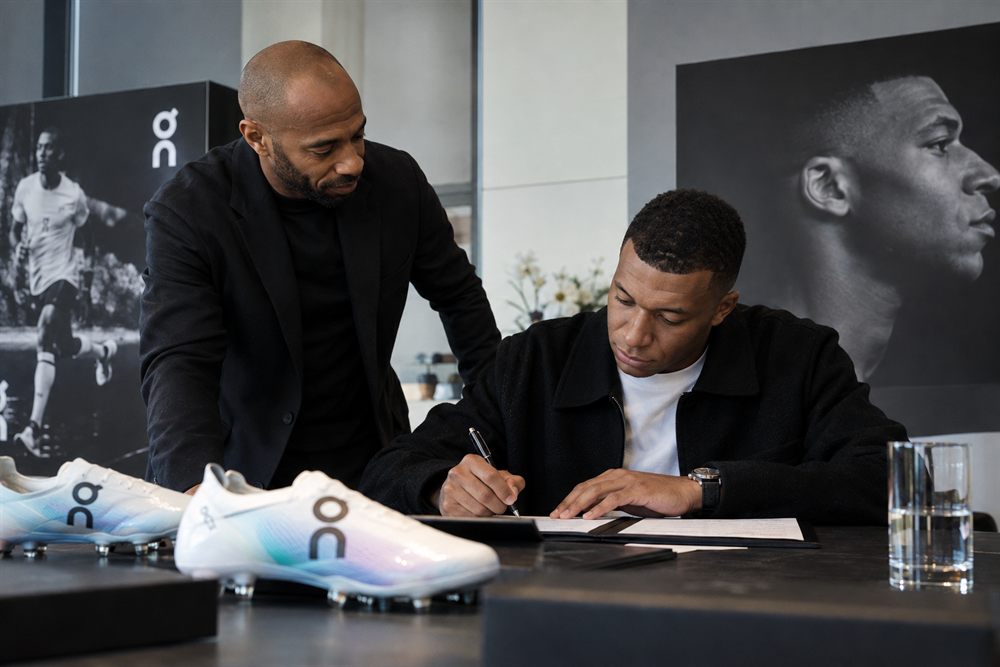
On, the Zurich running-shoe company, has signed Kylian Mbappé. It ends a relationship with Nike that ran for nearly twenty years. The deal is reported to be built the way On built its deal with Roger Federer: according to The Athletic and L’Équipe, Mbappé takes shares in the company rather than a fee alone. Neither On nor the player has disclosed the terms. The first boots, made with On’s LightSpray process, are due in 2027. Thierry Henry becomes On’s Director of Football, having worked on the project since late 2025, and Sydney Schertenleib, the Barcelona and Switzerland midfielder, will work with On on product for the women’s game.
The difference from a Nike or adidas contract is where the risk sits. A fixed fee pays the player the same amount whether or not the boots sell. Shares pay him according to how On does. So Mbappé is carrying part of the risk of On’s entry into football, which is the risk Nike would have carried itself. Whether that is a good trade for him depends on numbers nobody has published. What it says about the market is clearer: the incumbent’s cheque was not enough to keep the game’s most marketable player. The Ledger looked at the On deal in more depth here.
Sadio Mané is building a mango plant in his home village. He is paying for it himself.
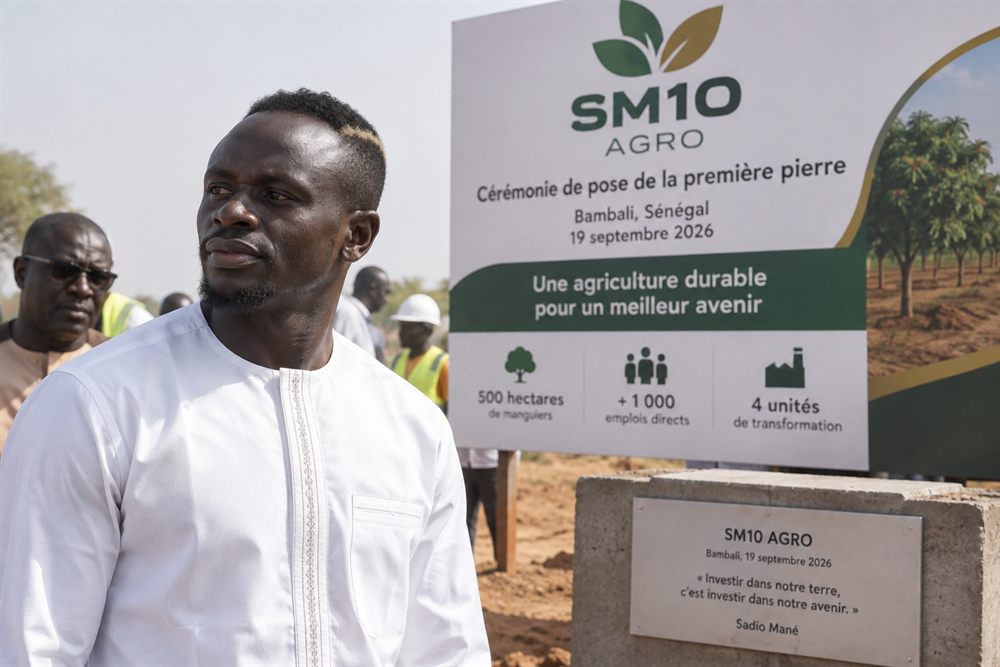
On 19 September Sadio Mané laid the foundation stone of SM10 Agro, an agro-industrial park at Bambali in southern Senegal, the village where he was born. The investment is 11.7bn CFA francs, about $20m, and he says it is his own money. The plan is a 500-hectare mango plantation of around 78,000 trees, with a first harvest in about three years, a packing station handling roughly 8,500 tonnes of mangoes a year for export, and three processing units making pulp, dried mango and mango butter. The build is planned at eighteen months, and more than 1,000 direct jobs are promised at start-up. Those figures are the project’s own.
Mané joins a category that is filling up fast. Footballers increasingly put their own money into businesses rather than rent out their names, and the Ledger mapped that shift here: media companies, new league formats, clubs, wineries, drinks brands, stakes in other people’s funds. Agriculture is a new entry on that list. It is also the furthest from football any of them has gone — a physical product, grown and processed, sold to buyers with no interest in the game.
That map also drew a line between owning a business and running one. Most players are backers: they supply the money and the credibility, and professionals do the work. Mané is the only named funder of a plantation, four plants and an export operation, in a region with no processing industry to hire from, and he is still playing. Who runs it day to day has not been announced.
Barcelona reported record revenue and negative equity on the same morning. Then it borrowed €510m more.
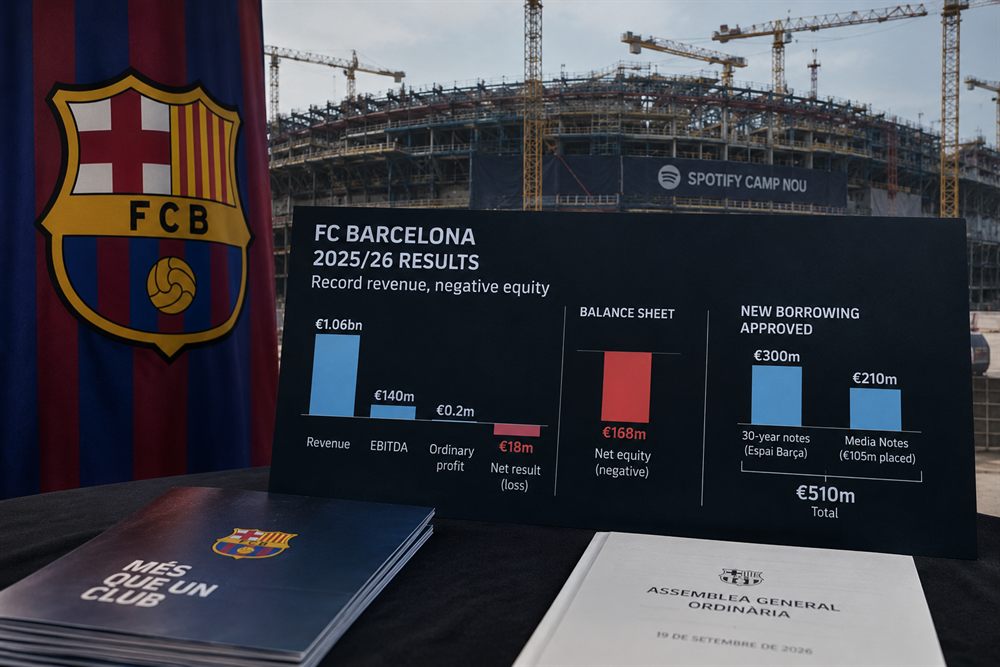
Barcelona’s members approved the club’s accounts on 19 September by 609 votes to 32. Ordinary revenue was €1.06bn, a record. EBITDA was €140m, ordinary profit €0.2m, and the net result a loss of €18m. Net equity is minus €168m: the club owes more than it owns. Barcelona says that line is “chiefly affected” by the interest on Espai Barça, the stadium project. That is the striking part. On the day it reported the most revenue in its history, the club’s balance sheet was negative, and by its own account the reason is the cost of the debt that paid for the stadium.
The same assembly then approved €510m of new borrowing. €300m comes as thirty-year fixed-rate notes for Espai Barça. €210m comes as Media Notes, a programme secured on the club’s television rights, of which half has already been placed. Total financial debt is around €2.68bn, roughly €1.8bn of it linked to the stadium. What changes hands is simple enough. The Media Notes investors are paid out of future television money before the club sees it, and the thirty-year notes commit Barcelona to fixed interest into the 2050s. The club’s position is that the Media Notes cover a two-year cash gap while the Camp Nou is finished, and that the extra €300m reflects a bigger project — more reinforcement work, more hospitality — rather than a simple overrun. Its own release calls it an increase in the overall project cost.
The Ledger set out in May how the club got here, and that piece is here: to register a squad after 2021, Barcelona sold twenty-five years of its broadcast rights and half its media company, then borrowed €1.45bn against the future income of a stadium that did not yet exist. It put the real test in the early 2030s, when the stadium debt service steps up. Friday gave the first hard reading. The original financing case assumed about €247m a year of new stadium income once the project is complete. Next season’s budget, with the ground open, assumes €60m of it and a net profit of €1m. At €1m a year, a €168m hole does not close.
Chelsea changed hands at a £5bn valuation. The men selling are barely in profit.
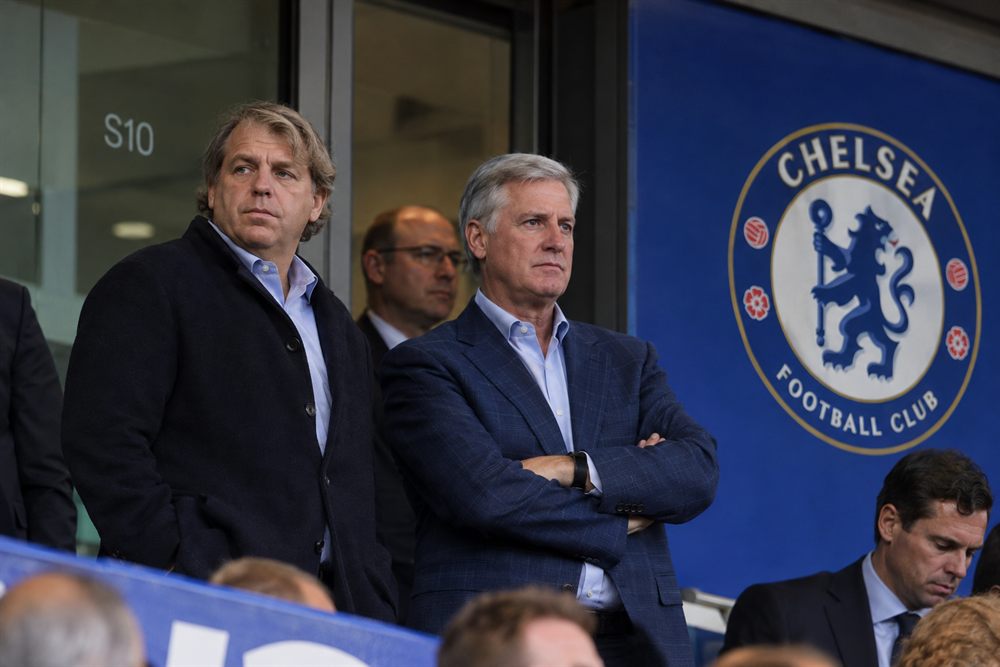
Chelsea has confirmed that Clearlake Capital is buying out two of its co-owners. Todd Boehly and Mark Walter are selling 12.83% each, for £950m in total. Boehly steps down as chairman. Clearlake goes from 61.5% to about 87%, and Hansjörg Wyss stays. The reported valuation is about £5bn. The sellers had little choice of buyer: the 2022 agreement is reported to bar sales to outsiders until 2032 while letting the owners sell to each other, so the only possible buyers were the other owners — in practice Clearlake, with Wyss taking a slightly larger stake.
The club was bought for £2.5bn in 2022, so a £5bn valuation looks like a doubling — yet the sellers are reported to expect only a small profit. The explanation is that the two numbers measure different things. The £5bn is an enterprise value: it counts the club’s debt, about £1.4bn of it, alongside the shares. What an owner actually holds is the part left after the debt. £950m for a quarter of the club implies the shares as a whole are worth about £3.7bn. The 2022 price of £2.5bn was for the shares alone, with no debt attached. Like for like, then, the equity has gone from £2.5bn to roughly £3.7bn in four years. And the owners kept putting money in along the way: the holding company’s accounts filed at Companies House show £2.9bn of equity subscribed by June 2025. Against £2.9bn paid in, £3.7bn is a thin return. Whatever else this deal is, it is not the windfall the headline number suggests.
The business did not produce that gain either. Chelsea’s revenue was £481m in 2021-22 and £491m in 2024-25 — a rise of about 2% in three years. The club lost money in three of those four years, and the single profitable one came from selling its women’s team to a company its own owners control. Nor did Chelsea simply ride a rising market. Football Benchmark, which values Europe’s 32 most valuable clubs every year, has the group up about 96% in euro terms between January 2022 and January 2026. It has Chelsea up about 40%.
Arsenal have a chief revenue officer for the first time. The org chart is the story.
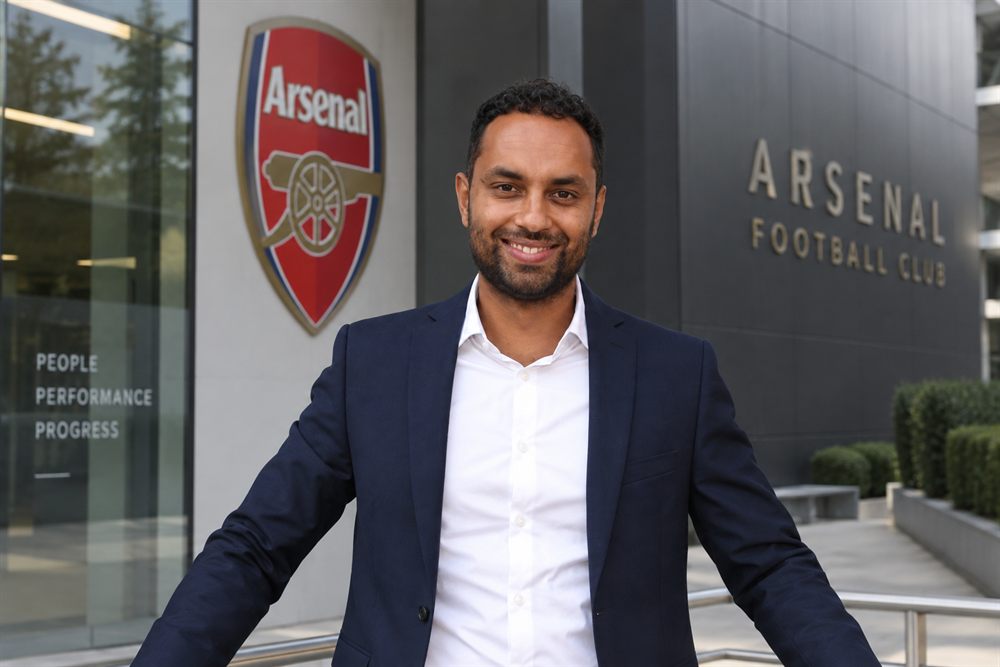
Arsenal have named Omar Shaikh as the club’s first chief revenue officer. Partnerships, ventures, the commercial side of the stadium and retail now report to one seat. Shaikh joined in 2023 and has run partnerships and ventures since 2024. The appointment came three days after the club engaged Boston Consulting Group to review its non-football operations, work overseen by chief executive Richard Garlick at a club that employs around 800 people. Arsenal declined to comment; Sky News reported that no decisions had been taken. This is the champions, months after winning the title, not a club reacting to a shortfall.
The timing is interesting. Clubs are working harder at commercial income than they used to. Liverpool have agreed to sell their shirt front to Turkish Airlines from 2027 for a reported £60m a season, up from about £50m. And the rules have changed at the same time: from this season the Premier League has replaced its old profit-and-sustainability test with a squad cost ratio, which limits what a club can spend on players to 85% of what it earns from football. Under that rule, the commercial side of the business sets the transfer budget. Arsenal have not said the two moves are connected, and there is nothing to confirm that they are. But putting partnerships, retail and the stadium’s commercial arm under one executive does something plain and useful: it gives the club’s income a single owner, someone who can plan it, forecast it, and be measured against it.
Rome prosecutors ask whether pressure on Lazio’s owner moved the share price.
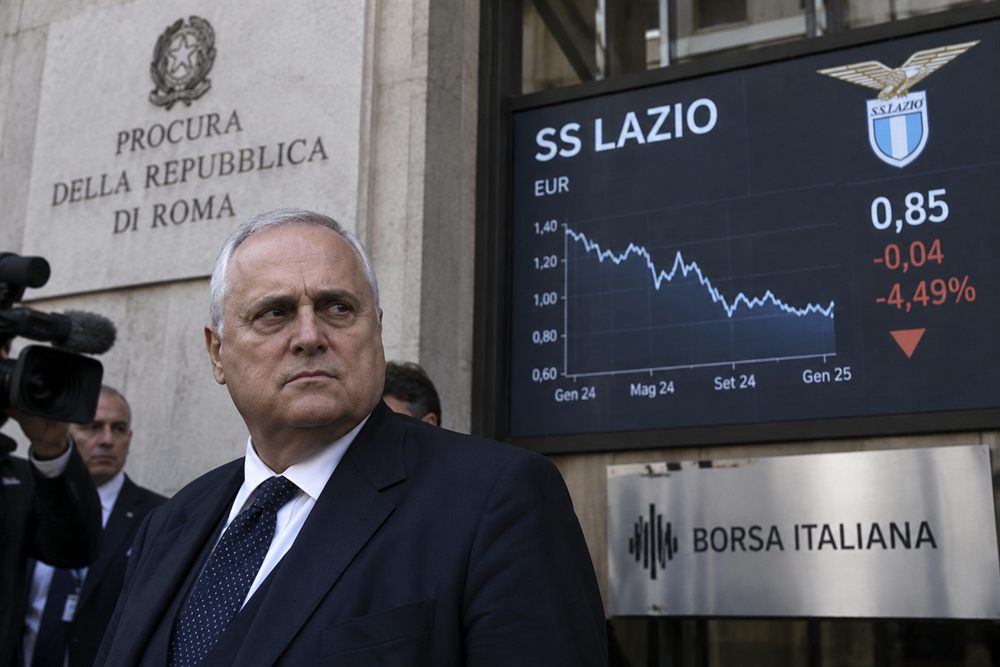
Lazio is one of only two Italian clubs with shares on a stock exchange; the other is Juventus. For more than a year there has been pressure on its owner, Claudio Lotito, to sell, and prosecutors in Rome have been investigating where that pressure came from. On 16 September they turned to the share price itself, on a suspicion of market manipulation. Trading through 2024 and 2025 is being examined, and devices have been taken from the chairman and chief executive of Banca del Fucino and from Luigi Bisignani. Those three men are under investigation; nobody has been charged, and Lotito is the complainant, not a suspect.
What prosecutors are asking is narrow. Three claims circulated: that a sale of the club was about to happen, that companies linked to Lotito were in financial trouble, and that the club would let itself be relegated to collect the payment that follows. Prosecutors are treating those claims as false. In Italy, putting out false information that moves the price of a listed company is a crime, which is why they are now checking the claims against the days on which Lazio’s shares moved. That is how an investigation into pressure on one man became an investigation into a share price.