The player is no longer the face. He's on the cap table.
A generation ago a footballer's life after the whistle meant coaching, punditry, or a name on a boot deal. Today they found chemicals firms, cognac houses and wearables, and take equity in AI. The market has repriced the footballer from a marketing cost into an owner — but ownership, it turns out, is not the same as operating.

A generation ago, a footballer's life after the final whistle ran along familiar tracks: stay in the game as a coach, a sporting director or a pundit; lend the name to a boot deal or a bar; or step away entirely. A newer track has opened, and it is filling fast — founder, owner, investor. And the ventures are stranger than any endorsement. Mathieu Flamini co-founded a green-chemistry company while still an Arsenal midfielder. Oliver Kahn sells a goalkeeping app. Gerard Piqué runs a mini-league that has raised over $160m. Gregory van der Wiel, who started the 2010 World Cup final at right-back, now says he is building a wearable to measure the mental strain that fifteen years of sports science never did. The question is not whether this is happening; it plainly is. It is what has changed in how the market values a footballer — and whether the players now run their businesses in any sense deeper than their names on the door.
01 From face to equity
Why now? Earlier generations had, if anything, more reason to build a second career — their wages were smaller and ran out sooner — yet they became coaches, pundits and publicans, not founders. The difference is not motivation. Three things changed, and none of them is a mystery.
The first is the money — not that players suddenly want a life after football, but that they can now fund one. The 1990s star retired needing an income, and took the work his savings could support: the coaching badges, the studio chair, the pub. Today's top player stops at around thirty-five holding founder-scale capital and four decades to deploy it. Necessity used to push the retired footballer into a job; wealth now pushes him into allocation — a company to seed, a fund to anchor, houses to buy on his own street, as Robbie Fowler did.
The second is the fear. Football has learned, publicly and painfully, what happens when that money is not put to work: the ex-players' charity XPro's much-quoted claim that three in five professional footballers face serious financial trouble within five years of retiring has hung over a generation of dressing rooms. Several of the ventures in this article exist because of that spectre — Louis Saha built AxisStars precisely to stop athletes' money and careers evaporating after the whistle. The lesson has been absorbed: the second career is now planned during the first, not improvised after it.
The third is the machine. Michael Jordan showed in 1984 that an athlete could take equity instead of a fee; Beckham brought the template into football with his Inter Miami option; and there is now an industry built to convert players into owners — athlete funds like Gamma Waves and LEAD's Locker Room, business-school programmes designed for athletes, agencies that structure stakes rather than sponsorships. Only at the very top does a fourth ingredient appear: an owned audience. Cristiano Ronaldo's 600-million-strong Instagram following — the most-followed account on earth — is a distribution channel bigger than most television networks, which is why his deals now arrive as equity, like his December 2025 stake in the AI firm Perplexity, rather than as endorsement fees. That is the peak of the pyramid, not the norm; the wave below it runs on capital, urgency and infrastructure.
Put together, that is the repricing: the footballer has changed from a salary-earner who rented out his face into a capital-rich thirty-five-year-old with a second career to build and an industry standing by to convert him. What he builds with it is the map that follows.
02 Eight ways a footballer becomes a business
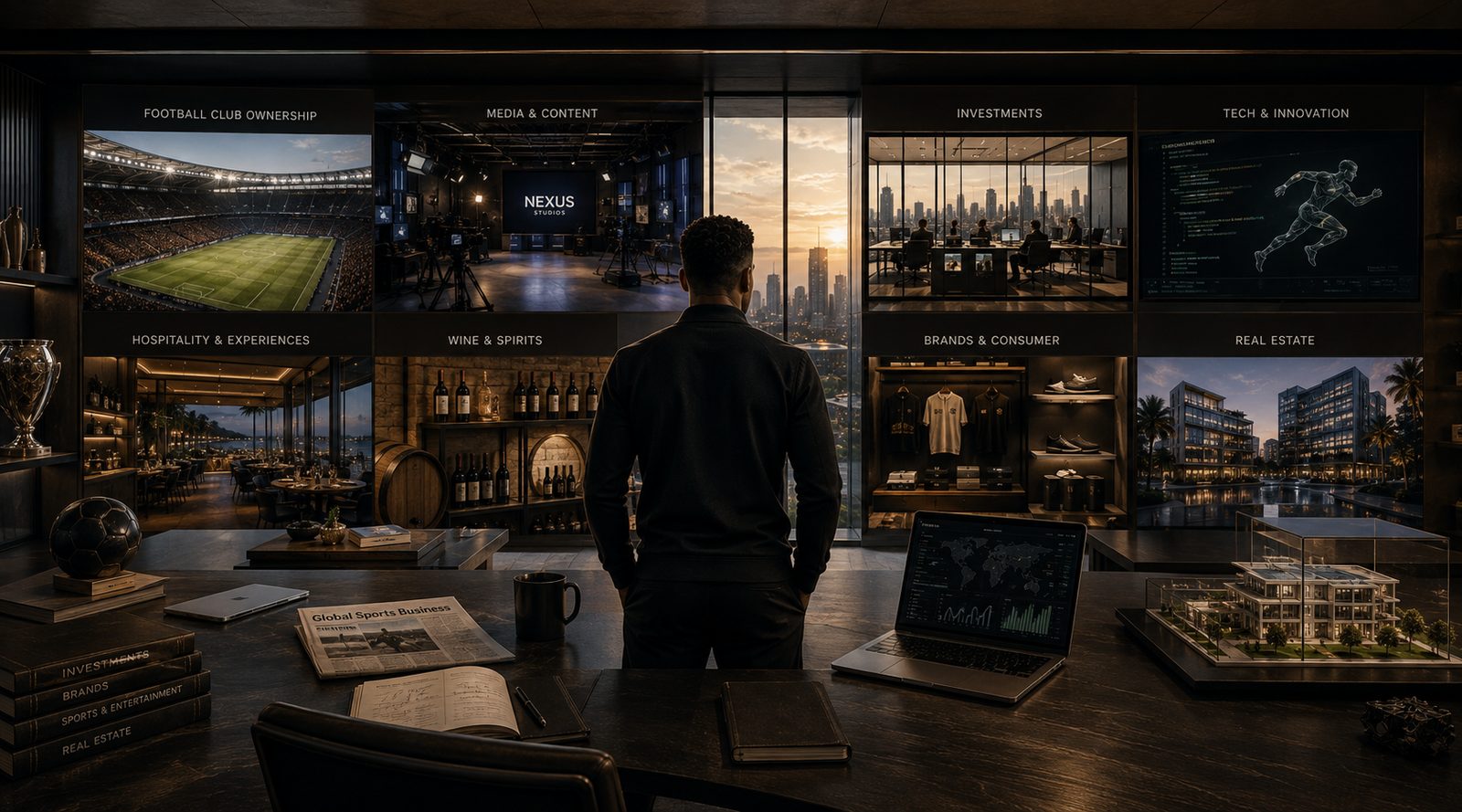
Once a player is a principal rather than a placement, the roles multiply — and the pace is quickening. The pioneers were rare and spaced apart: Andrea Pirlo bought a winery in 2007, Flamini co-founded his chemicals firm in 2008. Since 2020 the examples have arrived in a rush — counting football alone, Sifted found 19 current or former players who had backed at least one startup since the start of 2021. Strip away the celebrity and the field sorts into eight archetypes: four that face into football itself, and four that leave the game behind entirely.
Inside the game, the businesses grow out of the player's own platform. The media builder: Gary Neville turned punditry itself into an asset — his production company Buzz 16 grew to £11.8m of turnover making The Overlap and club documentaries, and he sold a majority stake to the Miroma group in 2022 while keeping the on-screen franchise. The format creator builds new competitions as entertainment IP: Gerard Piqué's Kings League — seven-a-side, streamer-fronted, gamified — has raised more than $160m with Piqué running it as chairman, while Toni Kroos co-founded Germany's Icon League with the streamer Elias Nerlich and took a €15m Series A from HV Capital. The club owner turns fame into control: Beckham exercised a $25m option to create Inter Miami; Neville bought out his billionaire partner at Salford City; Kylian Mbappé's vehicle owns around 80 per cent of SM Caen. And the investor: Mario Götze has quietly backed more than 70 startups with €25,000–€50,000 cheques and sits as a limited partner in over 20 venture funds; Blaise Matuidi co-founded Origins, a fund that turns fellow athletes into its investors; Iker Casillas runs the SportBoost accelerator; Giorgio Chiellini co-founded the €55m Gamma Waves fund; and Cristiano Ronaldo has taken equity in the wearable maker WHOOP alongside his Perplexity stake.
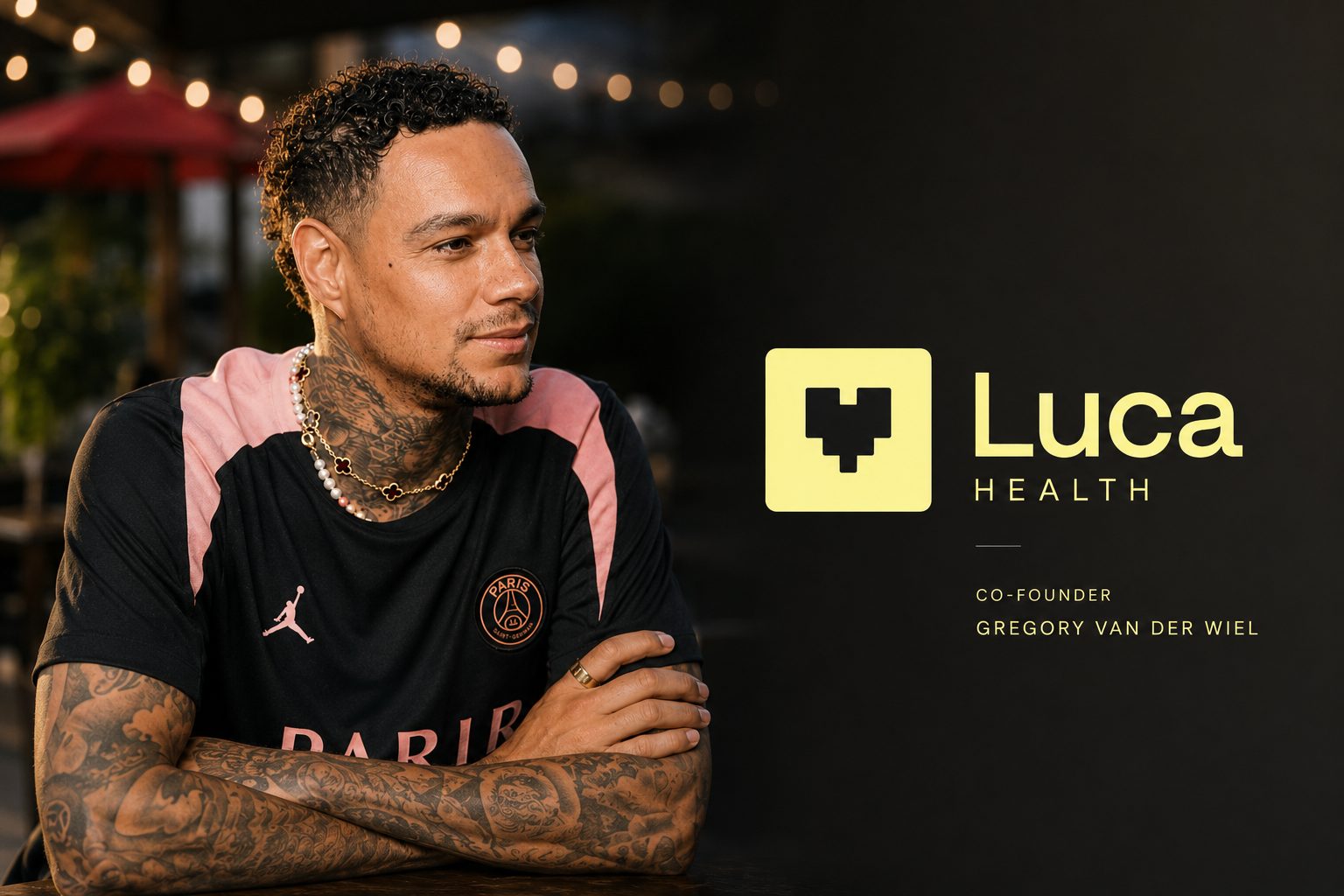
Outside the game is where it gets genuinely strange. The deep-tech and science founders: Flamini co-founded the green-chemistry firm GF Biochemicals in 2008 — while still an Arsenal midfielder — to mass-produce a plant-derived molecule that can replace petroleum; it raised a $16m round from Sofinnova. And Gregory van der Wiel, by his own account, is co-founding Luca Health, a wearable that reads cortisol and voice biomarkers for early signs of mental strain. "I was seven when Ajax took me in. Nineteen when I made the first team. Twenty-two when I started the World Cup final," he has written. "Everything about my body was tracked to the decimal… and nobody once measured my mental health. I won on paper. I was never there for any of it." When the playing stopped, he says, came panic attacks so severe he could not stand up. The company is his attempt to build the instrument he never had.
The digital and sports-tech founders productise the craft itself: Oliver Kahn built Goalplay, a goalkeeper-coaching app with a reported 50,000 users and its own line of gloves — Germany's greatest keeper selling his trade by subscription — and Louis Saha's AxisStars is a members' platform of athletes, agents and advisers built to professionalise the money side of sporting careers. The restaurateurs and vintners: Iniesta's family winery ships some 700,000 bottles a year, Pirlo makes wine near Brescia, and Olivier Tebily, once of Celtic, presses cognac on a 22-hectare estate in western France. And the brand-and-asset owners run from Ronaldo — who beyond the CR7 licensing line and his Pestana hotel joint venture has launched his own URSU9 alkaline water — to Robbie Fowler's eighty-odd rental houses on Merseyside.
03 Ownership is not operating
Here the consensus overreaches. The comfortable story is that footballers have become a new class of founders — the player as entrepreneur. The evidence says something narrower, and more honest: most are not operators. They are investors and partners. They supply capital, reach and credibility, and hand the running of the business to professionals.
The proof is in the structures. Mario Götze has backed more than 70 companies — but as an angel writing €25,000–€50,000 cheques and as a limited partner in other people's funds; a backer, not a builder. The athlete-collective funds make the division explicit: they pair rosters of players with institutions such as L Catterton and Patricof Co, who run the diligence and write the leading cheques while the players bring reach and trust. Even Beckham's name throws off licensing income mainly because Authentic Brands Group operates the machine. Partnering with people who know more may be the smartest structure there is — but it means the "athlete-founder" story is, for most, really an athlete-backer story.
The exceptions are the ones to watch, because they are where the model is trying to go. Gerard Piqué does not merely own the Kings League — he runs it, as its hands-on chairman, and has raised it past $160m; his earlier venture, Kosmos, was also his, and it spent a reported $3bn on the rights to reinvent tennis's Davis Cup before collapsing inside five years. That is the point, not a contradiction: operators have hits and misses, while backers only have names. Mathieu Flamini is a working chief executive of a chemicals company. These are genuine operators — still the minority, still rare — and the distance between them and everyone else is the real subject. Ownership is not the same as operating. Most footballers, for now, own. The question is how many learn to run.
04 Closing the gap
The clearest sign that this is a durable shift, rather than a fad, is that the serious ones are now buying the operating skill their ownership has outrun. In June 2026, left out of France's squad, the 23-year-old Real Madrid midfielder Eduardo Camavinga enrolled on a Harvard Business School executive programme, "The Business of Entertainment, Media and Sport"; Gerard Piqué had completed an HBS executive programme of his own in 2017. Vincent Kompany earned a full MBA at Alliance Manchester Business School while captaining Manchester City. Giorgio Chiellini wrote his Turin master's thesis on the business model of Juventus, the club he was then captaining — then turned the theory into practice, co-founding the Gamma Waves fund. Flamini calls becoming a chief executive "the first real job I've ever had."
This is the part that answers the question the whole trend poses. If the footballer's problem is that ownership has run ahead of operating skill, the response of the serious ones is not to hire the gap away for ever but to close it — to learn the job. A footballer taking an equity stake is now ordinary. A footballer sitting a business-school term to learn how to read the accounts of the company he owns is the leading indicator worth watching, because it is the first sign of the operator the model has so far mostly lacked.
05 The questions
The repricing is settled. The equity is real, the funds are being raised, and the smart money now treats a footballer's reach and credibility as an asset to be part-owned rather than an expense to be booked. What is not settled is whether the player stays an owner — a backer whose capital and credibility sit on someone else's cap table — or becomes something rarer: an operator who runs what he owns.
The market has already repriced the footballer from a face into an owner. The question every club, brand and fund now has to answer is whether the next generation becomes genuine operators of what they own — or whether the player stays what the smart money quietly treats him as today: reach and credibility, holding a slice of a business that professionals run.
By the time this cohort retires, either more footballers will have followed Piqué and Flamini into running what they own — operators, not names on the door — or the model settles into what it mostly is now: players backing companies other people run. On the evidence, the ones sitting business-school terms are the ones to watch. Which will it be?