How David Beckham became a business, not just a brand.
The headline says a former footballer became a billionaire. The more useful story is how. Beckham did not get rich by playing well for longer than his peers, or by making one lucky bet. He built a structure, sold part of it at the right moment, and kept the part that compounds — a template that everyone negotiating a modern player contract now works from.
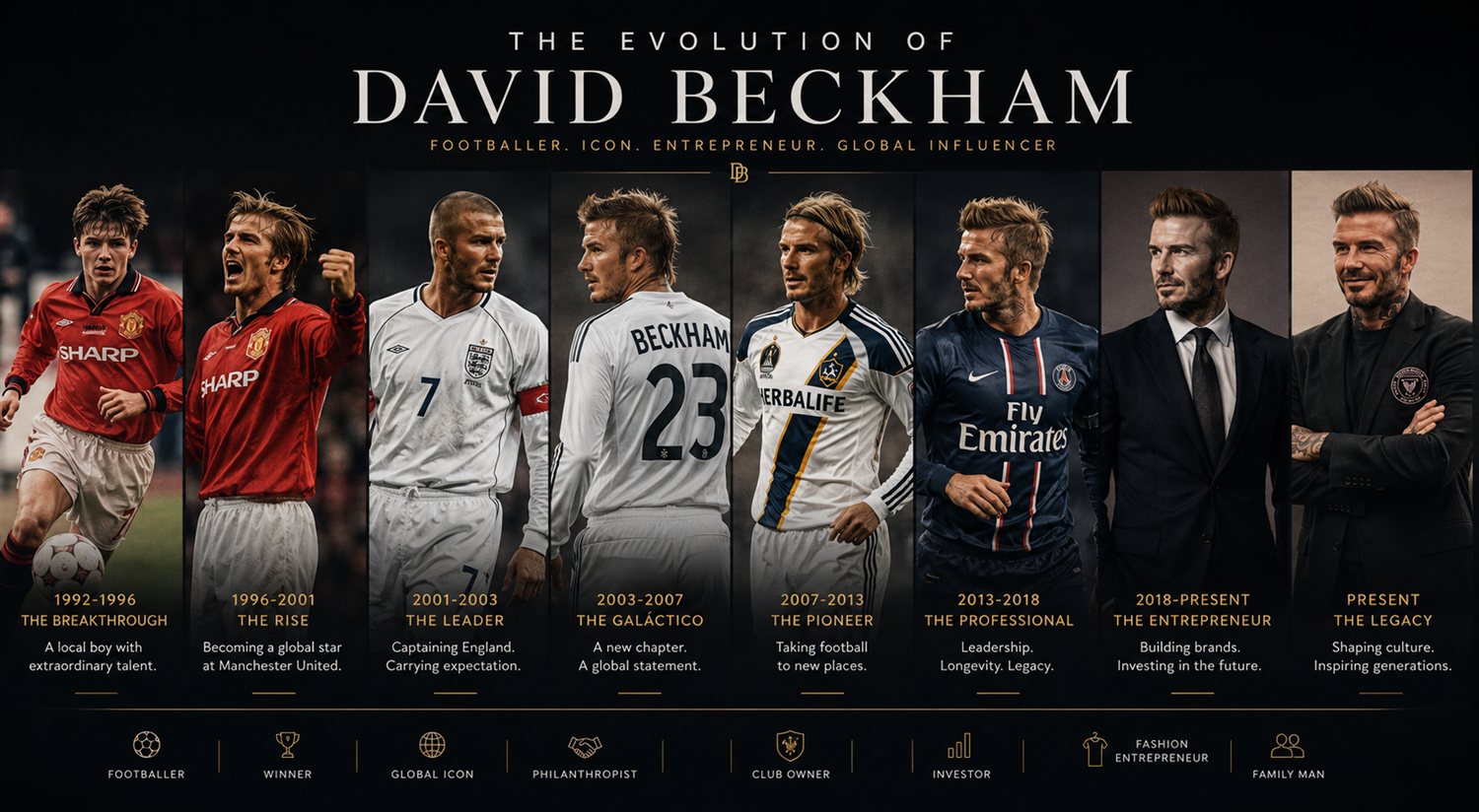
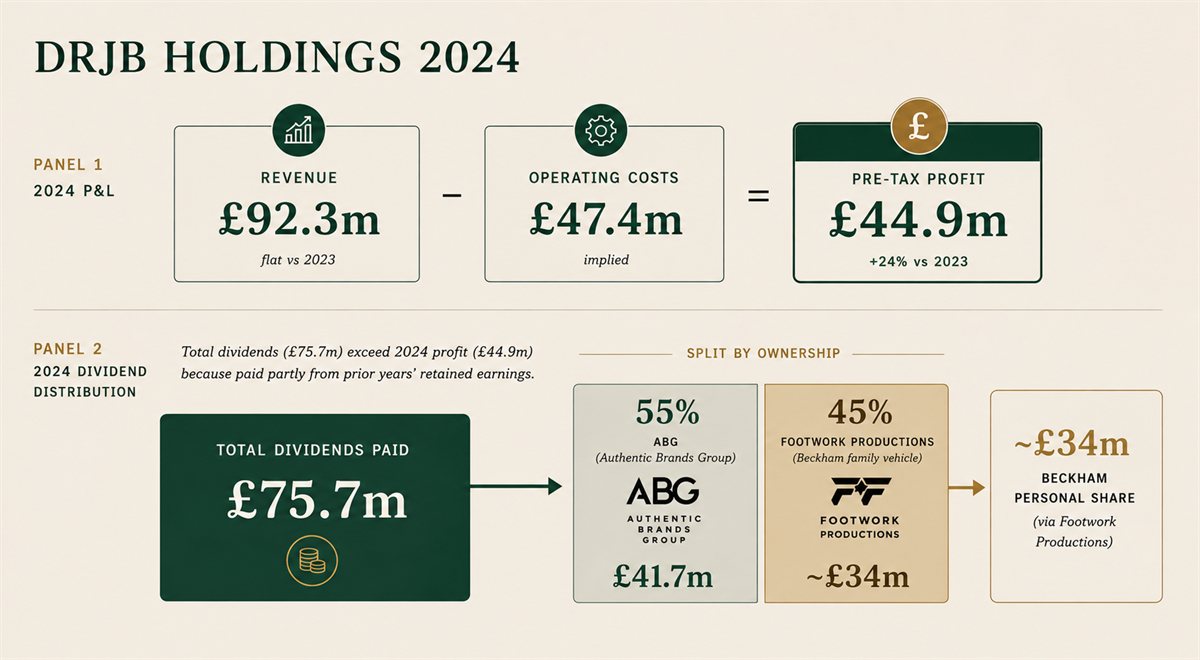
Sir David Beckham and his wife Victoria became Britain's first billionaire sporting household on the 2026 Sunday Times Rich List, published in May, with a combined fortune estimated at £1.185bn — roughly double the £500m the couple were assigned a year earlier. Beckham was knighted in November 2025, six months before that milestone landed, closing a loop that began three decades earlier on a Manchester United training pitch. The jump in wealth had two clear drivers: the rising valuation of his Inter Miami stake since Lionel Messi's 2023 arrival, and a record year at DRJB Holdings — the company that now houses his name, his licensing deals, and his production studio — which reported $44.9m in pre-tax profit for 2024, up 24 percent, on $92.3m of revenue, essentially flat.
The headline number invites a simple story: former footballer gets rich. The more useful story is how. Beckham did not become wealthy by playing well for longer than his peers, or by making one lucky investment. He built a structure, sold part of it at the right moment, and kept the part that compounds. That structure is now the closest thing football has to a template for what a playing career can become once the whistle blows for the last time.
01 The foundation: a player who behaved like a platform
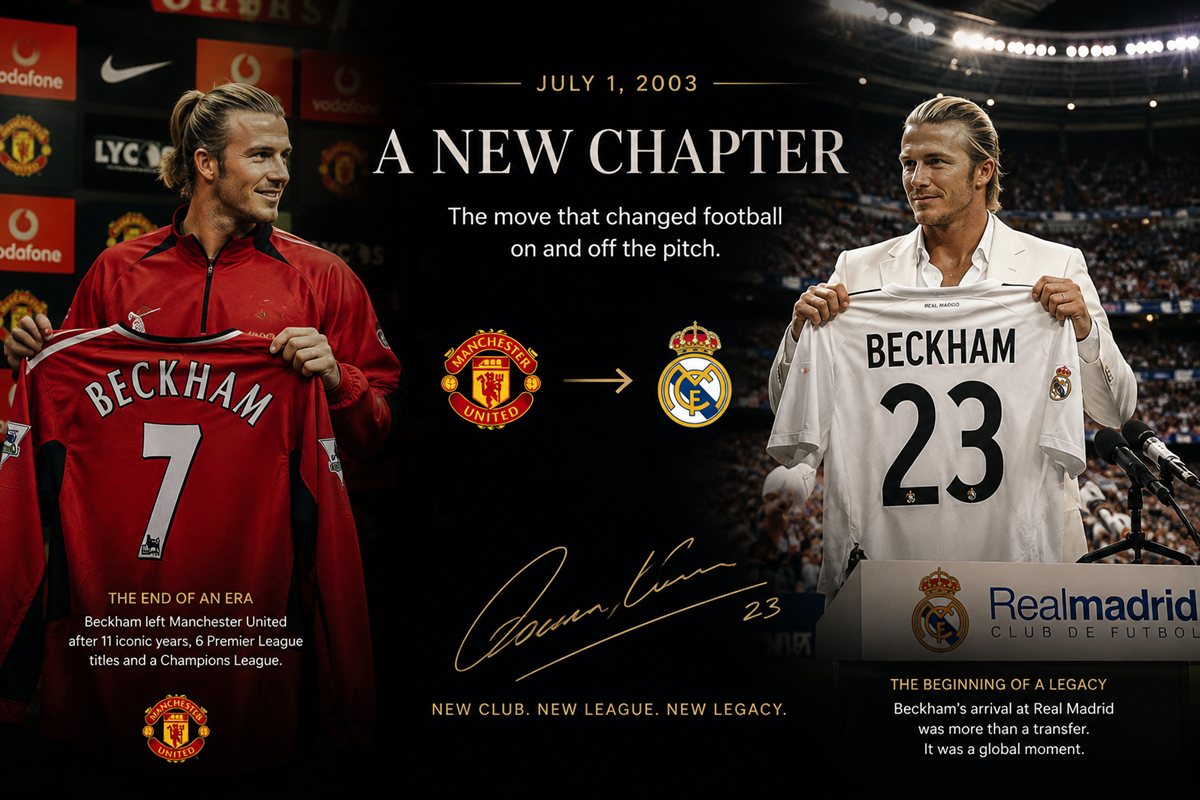
Beckham's football career supplied the raw material, not the business model. What made him unusual was recognising, earlier than most, that visibility itself had commercial value distinct from footballing output. His 2003 move from Manchester United to Real Madrid was reported at the time as being shaped in part by the club's read on shirt sales and its ambitions in the Asian market — a rare instance of a transfer being discussed alongside brand logic rather than purely sporting logic. That gap between football relevance and commercial relevance is the foundation everything else was built on. Simon Fuller, the manager behind the Spice Girls and later American Idol, began overseeing Beckham's commercial affairs that same year, 2003, through his company 19 Entertainment.
02 The pivot: from player to owner
Figure 1 below maps the full sequence, but two moments define the pivot from athlete to businessman. In January 2007, Beckham signed a five-year deal to leave Real Madrid for the LA Galaxy on a contract that looked eccentric to European eyes at the time: a base wage below his market value, offset by a share of the club's sponsorship and merchandise revenue and, critically, an option to buy an MLS expansion franchise for a fixed $25m once he retired. He exercised that option in 2014, choosing Miami. It became Inter Miami CF, which joined MLS in 2020.
That same year, 2014, Beckham Brand Holdings was established as the vehicle to own and license the Beckham name directly, with Fuller, David and Victoria Beckham each holding a third. In 2019, Beckham bought out Fuller's 33 percent stake in the brand company for a reported $50m, giving the couple full control for the first time. From that point, Beckham was no longer paid primarily to perform; he was paid to be a brand and, in parallel, an owner of appreciating assets.
03 The empire today
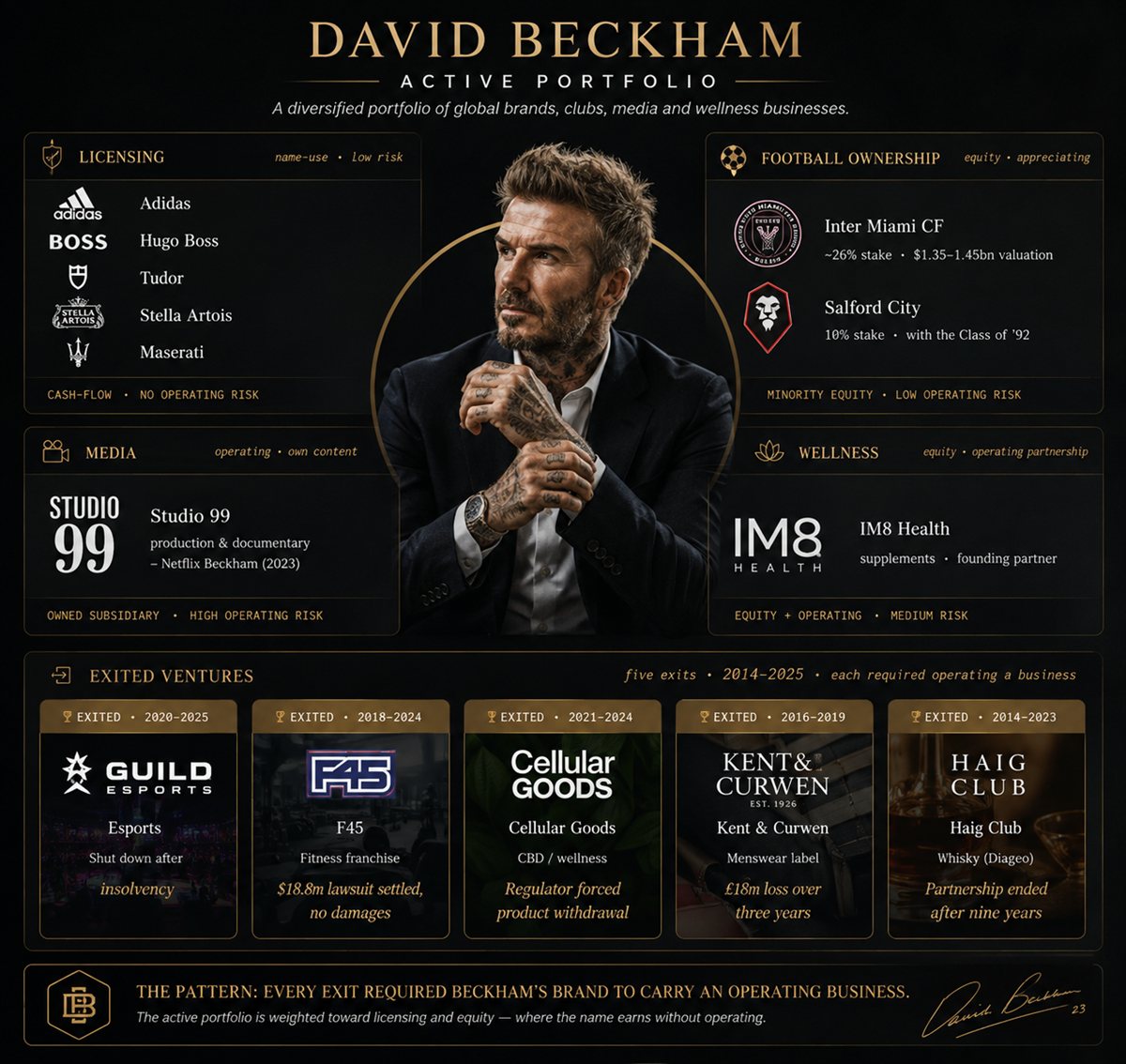
What exists today is not a single company but a portfolio grouped around one licensable name, shown in Figure 2. The common thread across the categories is licensing: most of these arrangements pay Beckham for the use of his name and image rather than requiring him to run the underlying operation. That is deliberate. It lets the portfolio scale without Beckham personally absorbing operational risk in categories he does not run day to day, such as supplements or production.
Inter Miami is the largest single asset by value. Forbes estimated the club's worth at $1.35bn before debt in June 2026, putting Beckham's reported 26 percent stake north of $300m; Sportico's separate February 2026 analysis placed the club as high as $1.45bn, the highest valuation in MLS history, following Messi's 2023 arrival and the move into the new Miami Freedom Park stadium. Neither figure is a disclosed transaction price; both are analyst estimates built from league revenue, comparable sales and franchise growth rates, and they should be read as such.
04 The machine behind him
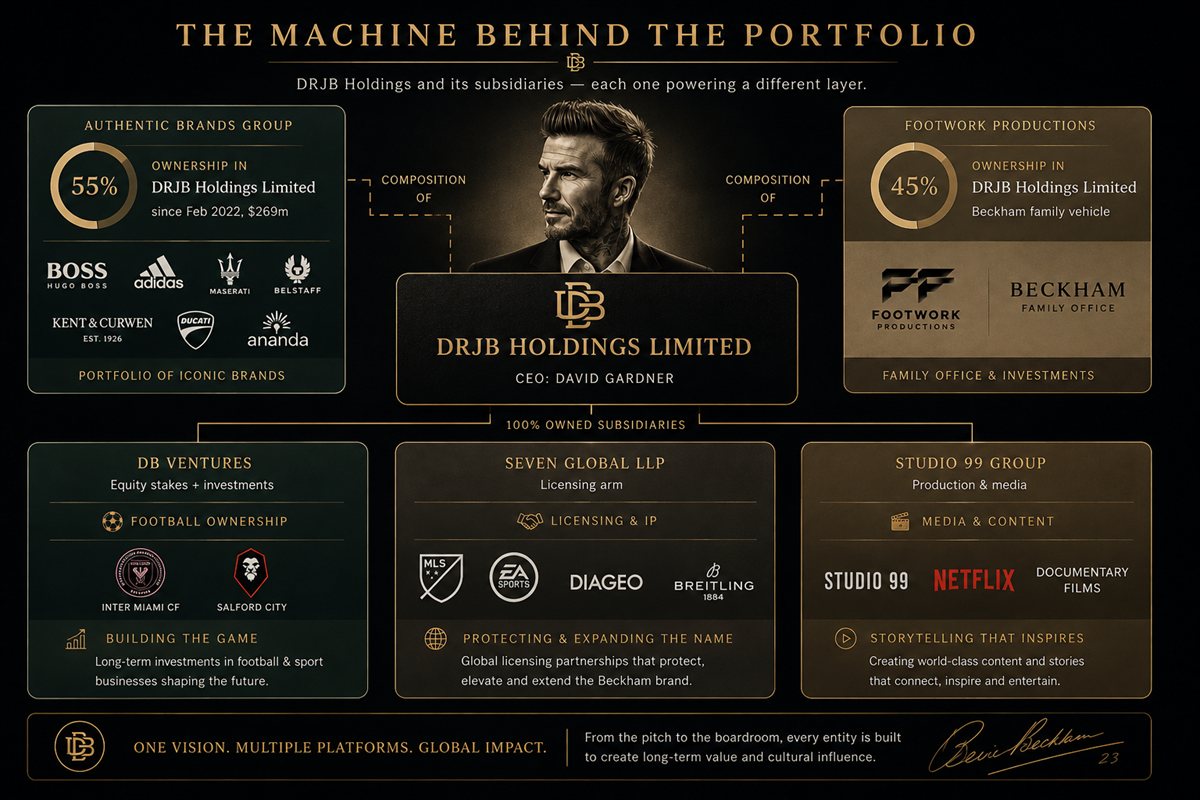
Fuller built the long-term career architecture between 2003 and 2019. Day to day, the business is now run by David Gardner, chief executive of DB Ventures and Studio 99 — an operator whose name rarely appears in headlines despite sitting at the centre of the entity structure. The current ownership sits inside DRJB Holdings Limited, which comprises David Beckham Ventures, the licensing arm Seven Global LLP, and the production company Studio 99 Group.
05 The flagship deal: how the name became an asset
The single transaction that reshaped Beckham's finances arrived in February 2022, when Authentic Brands Group — the American owner of intellectual property including Reebok and Sports Illustrated — bought a 55 percent stake in what became DRJB Holdings for a reported $269m. That price implies a total valuation for the business at the time of roughly $490m, a figure this piece calculates from the disclosed stake price rather than one stated directly by either party. Beckham became an ABG shareholder alongside fellow athlete-investors such as Tom Brady and Shaquille O'Neal, part of a wider shift in which star athletes increasingly take equity in the platform that licenses their name rather than settling for one-off endorsement fees. His name joined a licensing operation built to extract value from brands at scale rather than deal by deal.
Figure 3 sets out how that structure has performed in the most recent filed year. DRJB Holdings reported $92.3m of revenue for 2024, up just 1 percent on 2023, while pre-tax profit rose 24 percent to $44.9m — evidence that the ABG tie-up has been squeezing more margin out of a similarly sized revenue base rather than simply growing the top line. The company paid total dividends of $75.7m to shareholders; through Footwork Productions' 45 percent stake, Beckham's personal share of that payout was reported at roughly $34m. The figures matter less for their scale than for what they represent: a name that once earned money only when its owner performed on a pitch now earns money on a schedule, largely independent of any single sponsorship renewal.
06 The misses
The misses share one feature. Every business that failed required Beckham's brand to carry an operating business, not just to license his name onto it.
- Guild Esports (2020-2025). Equity stake plus a five-year image-rights agreement; floated on the LSE at a reported £41m; sold to DCB Sports in 2024 for a nominal payment plus assumed liabilities; shut down entirely in August 2025 after insolvency failed to attract a buyer.
- F45. DB Ventures sued the fitness franchisor in October 2022 for $18.8m, alleging failure to honour an ambassador agreement; the case was settled in mid-2024 with DB Ventures retaining its investment rather than recovering damages.
- Cellular Goods. 5 percent stake via DB Ventures ahead of the February 2021 LSE listing; UK regulators forced withdrawal of the ingestible range in 2022 for failing to meet Food Standards Agency rules; DB Ventures sold its stake in 2024 shortly before the company exited CBD entirely via a reverse takeover.
- Kent & Curwen. Equity stake from 2016 in the heritage menswear label Beckham fronted from 2015; the brand lost £18m over the three years to end-2018; he exited at the close of 2019 as the parent sold it on.
- Haig Club. Single-grain whisky co-developed with Diageo from 2014, marketed almost entirely around his face; partnership ended 2023 as he moved to pursue drinks ventures of his own, including the later stake in IM8.
The pattern is diagnostic. Everything else required an operating business to work. Everything else, at some point, failed. The asset that never lost value across two decades was the one built the other way — the name, held at arm's length from operations and licensed rather than operated.
07 Where it goes from here
Three things will shape the next phase. First, how far Authentic Brands Group pushes the licensing model into new categories now that the DRJB structure is generating consistent, disclosed cash flow. Second, whether Inter Miami's valuation holds once the attendance and sponsorship effects of Messi's arrival normalise, particularly with the club's new stadium now fully operational. Third, whether DRJB Holdings can keep compounding at anything close to the rate it just posted: 24 percent profit growth in a single year is not a pace licensing businesses typically sustain once the initial post-acquisition integration under ABG is complete.
What is already clear is the template Beckham leaves behind. Build a brand distinct from playing performance while still playing. Negotiate an ownership option into a contract rather than settling for a one-off fee where possible. Sell a minority of the brand to a licensing specialist once it can support outside capital, but keep control. Every footballer now negotiating equity clauses into a boot deal, or eyeing a stake in the club they play for, is working from a playbook Beckham assembled piece by piece between 2003 and 2022. The next profile in this series, on Cristiano Ronaldo, tests whether raw reach and audience size can build the same kind of durable asset without the same ownership structure underneath it.