Cristiano Ronaldo's football-to-business evolution. Where does his name go next?
Ronaldo went from player to the most marketable athlete in the world to a business owner. What carried him through each stage was the same asset: an audience that follows him wherever he goes. For years companies paid to borrow it. Since 2015 he has also been an owner, starting with hotels, and since 2024 he has invested faster, usually as both shareholder and the face of the company. The question is what he builds with it next.
 Written by Ali Ahmed
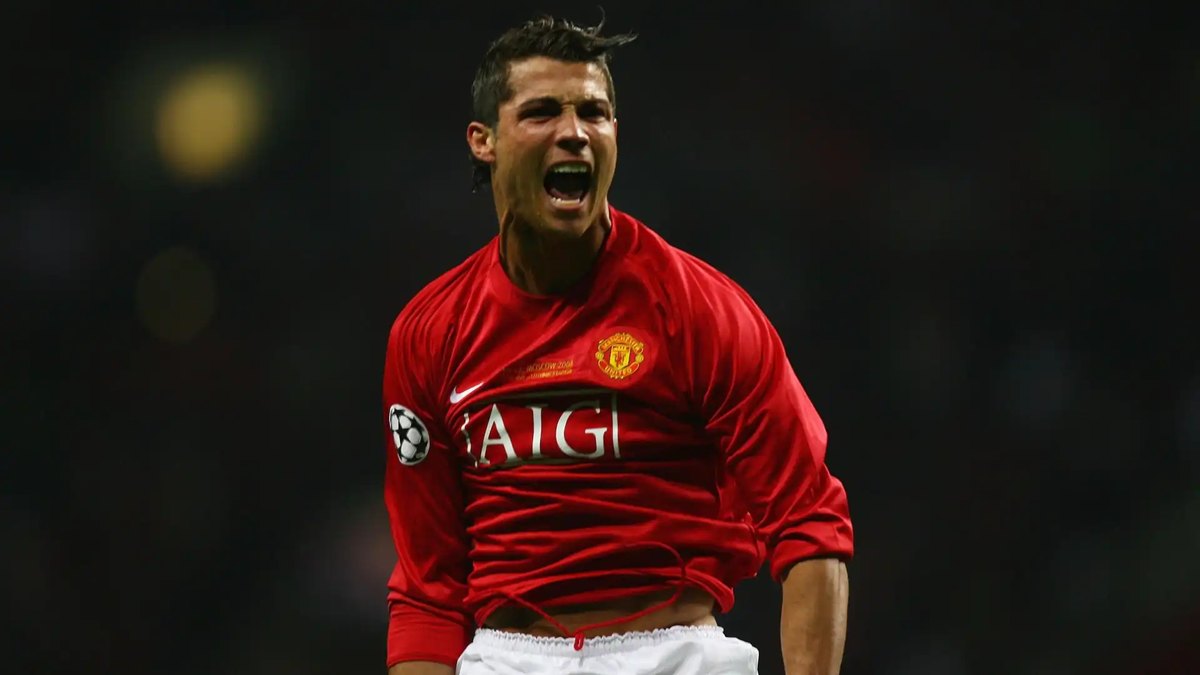
On 18 February 2026, Herbalife announced that Cristiano Ronaldo had taken a 10 per cent stake in Pro2col, its health-technology business. The company's own filing later showed how the stake was paid for. The first 5 per cent came in exchange for his services and sponsorship rights. Only the second 5 per cent cost cash, $7.5m, bought through an option priced in advance. Eight days later he bought a quarter of UD Almería, a Spanish second-division club. Ronaldo has owned businesses for a decade, but Pro2col is the first deal whose public terms show his name being used as payment. The story runs through three stages: the player, the brand and the owner.
01 The player
Everything Ronaldo sells starts with the football. He left Sporting for Manchester United in 2003, at 18, for £12.24m. In 2009 Real Madrid paid United £80m for him, a world-record fee at the time. The fee did more than move a player. It priced him, publicly, as the most valuable footballer in the world, and the trophies and goals that followed kept that price credible. He became the first man to score more than 900 official goals, in September 2024.

That price was built in stages, and the first was a long way from any market. Ronaldo was born in Funchal, on Madeira, in 1985. At 12 he left the island on his own for Lisbon, after a three-day trial with Sporting's academy. He made his first-team debut in August 2002, at 17. A year later Sporting opened its new stadium with a match against Manchester United. Sporting won 3–1, and the story goes that United's players urged Sir Alex Ferguson to sign the teenager who had run at them all evening. Within days United had signed him and given him the No. 7 shirt.
At United he changed from a winger known for his tricks into a goalscorer. In 2007-08 he scored 42 goals in all competitions, won the Premier League and the Champions League final in Moscow, and collected his first Ballon d'Or as the world's best player. United won the league three seasons running, from 2007 to 2009. In business terms, this is when the asset was proven: the best player in the world, in English football's global shop window.
Real Madrid then bought the finished product. On 6 July 2009, about 80,000 people filled the Bernabéu to watch him presented, for a player who had yet to play a minute for the club. Over nine seasons he scored 451 goals in 438 games, the most in the club's history, and won four Champions Leagues and four more Ballons d'Or. The world-record fee had been a bet that he would become the face of the club, and for nine years he was.
After Madrid, each move took his name to a new audience. Juventus paid €100m for him in 2018, when he was 33, and he won two Serie A titles there. He returned to Manchester United in 2021. In January 2023 he joined Al-Nassr in Saudi Arabia, on a contract widely reported as the most lucrative in football. With Portugal he won Euro 2016 and the Nations League in 2019 and 2025, and in September 2021 he became the leading men's international goalscorer of all time.
The performance came with a persona that travelled further than the results. Ronaldo built a public image around work rate and self-discipline, and around moments fans could copy. He built that image deliberately, through his training, his diet and the way he presented himself, at a time when few players treated their image as an asset. His "Siu" celebration first appeared in a Real Madrid friendly against Chelsea in the United States in the summer of 2013. He later said it came out "completely natural", and that he kept doing it because fans liked it and would remember it.

Records, relentless effort and a signature that children imitate in playgrounds turned a great player into a recognisable character. Companies then came in and added fuel.
By his mid-twenties Ronaldo therefore had two things that rarely come together: a price that proved he was the best, and a character people wanted to copy. The next stage turned that into income that did not depend on any one club.
02 The brand, then the first stakes
The second stage was other people's money buying access to his audience. Nike signed him as a teenager in 2003 and, in 2016, gave him a lifetime agreement that TMZ valued at about $1bn; Nike has never confirmed the figure. Herbalife, the nutrition company, became a sponsor in 2013, the start of a relationship that would later lead to the Pro2col deal.
At the same time his initials became a business of their own. From 2013 the CR7 name appeared on underwear, then on clothing, footwear and fragrance, each made and sold by a partner company under licence. The same year a museum devoted to him opened in Funchal. The model was simple: the partner carried the cost and the risk of making the product, and Ronaldo's name carried the sales.
The list of partners kept growing as his audience grew. By 2022 it ran from Nike and Herbalife to Binance, which launched a collection of his digital collectibles, and Louis Vuitton, which photographed him playing chess with Lionel Messi for a campaign that November. Each of these deals followed the same logic as the first: a company paid to stand next to him in front of his followers.
By 2020 the money had added up. That June, Forbes reported that he had become the first footballer to earn more than $1bn over his career, counting salary and endorsements together. Almost all of it had been earned the same way, by being paid for his time, his face or his name. None of it yet came from owning something.
The first step from renting his name to owning a business came in December 2015. Ronaldo and Dionísio Pestana set up Pestana CR7, a hotel company owned in equal parts, with Ronaldo reported to be putting in more than €37m of a €75m plan for four hotels. The first opened in Funchal in July 2016, with Lisbon later that year. Pestana runs the operations; Ronaldo's name is on the door. The brand has since grown to five hotels, adding Madrid's Gran Vía and New York's Midtown in 2021 and Marrakech in 2022. A joint venture with Crunch for CR7 Fitness gyms followed at the end of 2016. In 2018 he joined Rafael Nadal, Enrique Iglesias and Pau Gasol as a partner in the Tatel restaurants. Insparya, the hair-restoration group, came next: he partnered on its Madrid clinic in 2019 and became a shareholder in the group in 2021. These were owner's stakes, each carrying his name or his face. How much of each was paid in cash, and how much in his name, has not been disclosed.
The pattern of this period is worth naming. Each business sat close to the image he had built: hotels with his initials, gyms built on his training, restaurants with other famous names, clinics that sell looking good. He was not investing in things far from himself. He was investing in versions of himself.
Jorge Mendes, his agent from his Sporting days until the move to Saudi Arabia, handled the football contracts. Even with the hotels, the salary remains the bigger engine. Forbes estimates he earned about $300m in the year to May 2026, level with the highest figure it has recorded for an athlete. Some $235m came from his Al-Nassr contract and $65m from everything else.
What changed the bargain was not the size of the endorsements. It was evidence that his audience belonged to him, not to the clubs he played for.
03 The audience follows him
Every time Ronaldo has moved, the attention has moved with him. When he joined Juventus in 2018, the club gained about 3.5 million Instagram followers in the days that followed. In October that year he became the most-followed person on Instagram. When Al-Nassr announced him at the end of 2022, its Instagram account went from about 860,000 followers to 5.5 million within days. In August 2024 he launched his own YouTube channel, UR·Cristiano, and it passed a million subscribers in about 90 minutes, a platform record. A month later he became the first person with a billion followers across social media.
For a sponsor, this is the point. A brand that pays Ronaldo reaches his followers wherever he plays, whichever club holds his contract. The clubs rent his attention for a few seasons. The companies that work with him rent it for as long as the partnership lasts.
He has also started selling that attention without a middleman. The YouTube channel is his own media outlet: the audience watches him directly, not through a club or a broadcaster. In April 2025 he launched a film studio, UR·Marv, with the director Matthew Vaughn, announced through Variety. Both are early, and neither has published revenue. But they show him moving from being content that others distribute to owning the distribution.
An audience that moves with one person is an asset that person can invest. Ronaldo has been doing that since the hotels in 2015. What has changed in the past two years is how often he does it, and how closely he ties himself to each company.
04 Shareholder and face of the brand
Ronaldo has owned stakes since 2015. What changed after 2024 is the pace and the pattern. In about two years he took at least seven new positions, and in most of them he is also the company's ambassador or sponsor. Only one deal shows how the stake was paid for.
- WHOOP. The wearable maker named him an investor and global ambassador in 2024, and he joined its 2026 funding round as an individual investor.
- Perplexity. In December 2025 he took a stake in the AI search company, size undisclosed, alongside a global sponsorship and a Ronaldo hub on its platform. The announcement does not say whether the sponsorship paid for any of the stake.
- Pro2col. Pro2col is Herbalife's health-technology platform, built to give users personalised nutrition plans. The deal grew out of a Herbalife sponsorship that began in 2013. Half the 10 per cent stake was paid for with services and sponsorship rights, half with $7.5m. On the day Herbalife announced it, alongside quarterly results, its shares rose as much as 23 per cent.
- Bioniq. He invested in the nutrition company in October 2024. Eighteen months later Herbalife bought it for a $55m base price and up to $150m in total. His share has not been reported.
- LiveModeTV. In May 2026 he bought a significant stake, size and price undisclosed, in the international arm of LiveMode, the Brazilian sports streamer linked to CazéTV. It holds rights to 34 World Cup matches this summer, shown free on YouTube.
- Clubs. He holds 25 per cent of UD Almería through CR7 Sports Investments, bought in February 2026 from a club whose owner and president is the Saudi businessman Mohamed al-Khereiji. "It has been a longtime ambition of mine to contribute to football, beyond the pitch," Ronaldo said. His 2025 Al-Nassr extension was reported to include a 15 per cent stake, and in September and October 2026 reports linked him to a consortium seeking up to 20 per cent of the club. Al-Nassr has confirmed none of these terms.

Pro2col shows what his audience can buy: half of a 10 per cent stake, with options to take more on similar terms. For the other deals the split between cash and reach is not public, so how far the pattern goes cannot be shown. What is clear is that since 2024 he has tied himself to the companies he backs as both owner and face.
That combination changes what he gets out of a deal. As a sponsor he was paid a fee, and the fee ended with the contract. As a shareholder who is also the face, he shares in whatever value his attention helps create. He was a shareholder in Bioniq when Herbalife bought it, although his return has not been reported. It also means his money now rides on the same thing as his fees always did: people continuing to watch him.
05 The contrarian read
The usual reading is that Ronaldo is the ultimate athlete-businessman: the highest-paid sportsman in the world, now a billionaire investor. The record supports a narrower view. Almost four-fifths of his income still comes from playing. Outside the hotel company he co-owns with Pestana, the stakes with known sizes are minority positions in someone else's business, or a reported interest in a club controlled by a sovereign fund. Of his outside investments, only Pro2col has a public price, and that price was set in advance.
Ronaldo's real asset is not his wealth but an audience that follows him. In at least one deal he has used it as currency for equity, and so far his stakes are small ones whose value depends on him staying at the centre of attention. He has not yet built a business that would keep that audience if he stepped away.
The comparison that matters is David Beckham. In 2022 Authentic Brands Group bought 55 per cent of DB Ventures, the company that manages Beckham's brand, for about £200m. That deal put an outside price on a footballer's name, years after he stopped playing, because the business was built to earn without him on the pitch. Nothing in Ronaldo's portfolio has been priced that way yet. His hotels, his gyms and his stakes all carry his name, but none is a company whose value is set by what someone else would pay for his brand.
That is the test his next move faces. His Al-Nassr contract runs to June 2027, and the attention his playing generates will not last for ever.
Where does Ronaldo take his name next? When his playing contract ends in June 2027, will he use the audience that follows him to build something he controls, a club, a competition or a media company, rather than lending it for minority stakes? If he does, he joins David Beckham among the few footballers whose name became a business that outlived the playing career. If not, his empire stays a portfolio of bets on his own fame.