McDonald's didn't leave football. It left the four-week rental.
After 32 years, McDonald's will not renew its World Cup sponsorship. FIFA is not short of money: it expects more than $15bn this cycle and sold its 2026 sponsorship slots. McDonald's left because one month every four years no longer fits how it wants to market, and it is keeping the football deals that run every week. FIFA can replace the money easily. Replacing the restaurant may be harder.
 Written by Anthony Raad
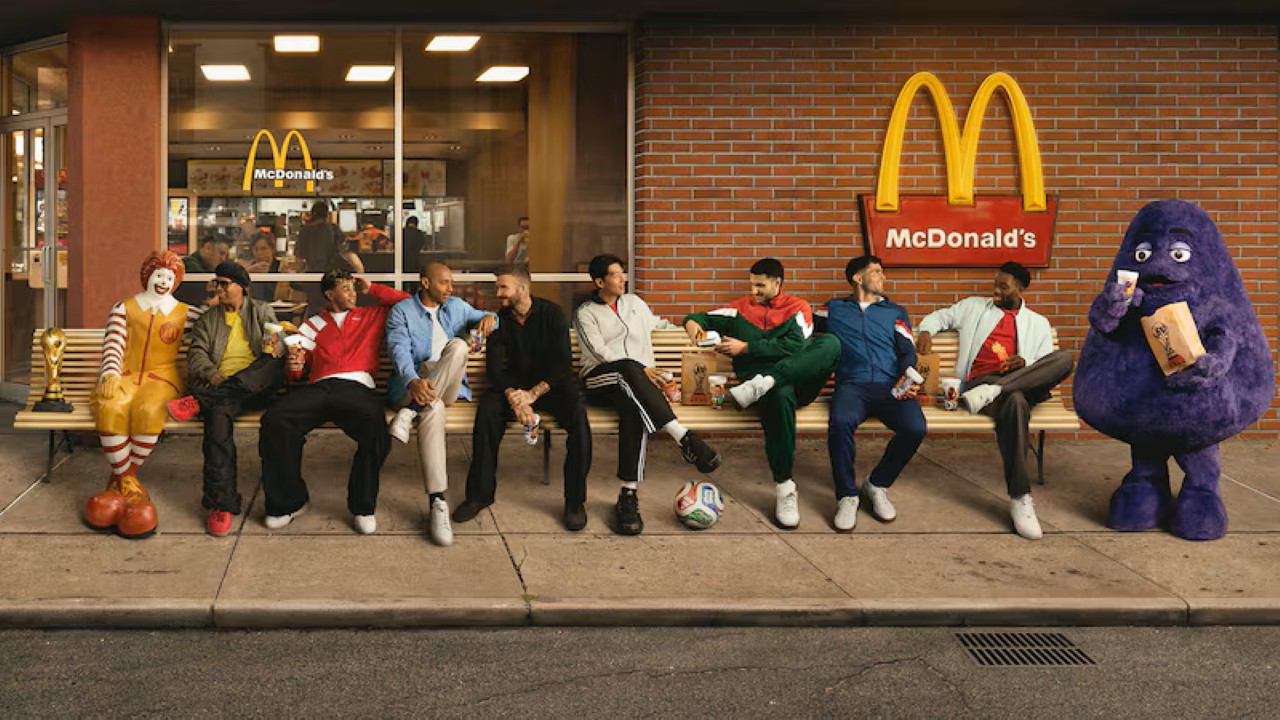
On 23 October 2026, Adweek reported that McDonald's will not renew its sponsorship of the FIFA World Cup. The partnership began with the 1994 tournament in the United States and ends after the 2026 one, played largely in the United States, 32 years later. McDonald's said the decision was unrelated to recent headlines about FIFA. The timing invited the opposite reading. FIFA had spent the autumn fighting over a plan to sell part of its commercial rights, a power struggle with UEFA and questions about its governance. But the exit is easier to explain from McDonald's side than from FIFA's, because McDonald's has said, in its own words, what it no longer wants to buy.
01 What McDonald's bought
In 1994 McDonald's was one of the official sponsors of the first World Cup held in the United States. The others included Gillette, Coca-Cola, General Motors and MasterCard, and the newer sponsors paid FIFA as much as $20m each, according to the Christian Science Monitor. It stayed for every men's World Cup since, nine in all. Its last deal, announced in May 2023, made it Official Restaurant Sponsor of the 2023 Women's World Cup and the 2026 men's World Cup. GlobalData Sport values it at about $40m a year; other estimates run higher, and McDonald's has never published the price.
What the money bought was a burst. A World Cup sponsor gets exclusive use of the tournament in its category, for about a month every four years, plus the women's tournament in between. McDonald's used it at full scale in 2026. Its campaign, made by Wieden+Kennedy New York, ran in more than 110 countries and was the company's largest marketing push of the year, built around collectable cups and a World Cup meal.
That is a big bet on a few weeks. In 2026 McDonald's decided the bet no longer paid.
02 Why it walked
McDonald's has given two reasons, and both come from the company itself.
The first is a change of strategy. In September, chief marketing officer Morgan Flatley said: "I think we've become overly reliant on borrowed IP." Borrowed IP means other people's brands: a tournament, a film, a celebrity. Flatley said the company should "be very selective and do it a few times versus becoming a frequent piece of our calendar." McDonald's says it is roughly doubling its investment in longer-running programmes that build its own brand.
The second is the result. On the second-quarter earnings call on 4 August, chief financial officer Ian Borden said the World Cup campaign "provided a lift to the business and generated excellent system excitement", but that it "underperformed versus our expectations." US comparable sales rose 0.8% in the quarter, against 2.5% a year earlier. Borden put about two-thirds of the shortfall in US customer visits against forecast down to problems with the value menu, and most of the rest to the World Cup campaign.
Two checks test whether this is about football or about McDonald's.
- Is McDonald's leaving football? No. It is the title sponsor of France's top division, Ligue 1 McDonald's, in a deal reported at up to €20m a season that runs to the end of 2026-27. It is putting its name on McDonald's Park, the Chicago Fire's new stadium, and it sponsors Formula 1 in Latin America. "Sport and culture will remain important ways we connect with our fans," the company said. Each of these deals is visible every week of a season, not for one month every four years.
- Is the World Cup failing everyday brands? Not on the evidence. Coca-Cola, which sells to the same customers every day, raised its annual forecast in July and credited a lift in World Cup sales. The verdict is McDonald's own: at its price, the World Cup gave McDonald's less than it needed.
There is also a precedent. In June 2017 McDonald's ended its Olympic sponsorship after 41 years, three years before the contract ran out. The IOC said it understood McDonald's was "looking to focus on different business priorities", and that it had no immediate plans to replace it in the category. The IOC's worldwide partners today include no restaurant brand.
McDonald's has now left both of sport's biggest four-yearly events, while keeping the deals that run every week. That pattern matters more to FIFA than the money does.
03 What it means for FIFA
FIFA will not miss the money. Gianni Infantino has told member associations that FIFA will generate more than $15bn in the 2023-26 cycle, against an original projection of $11bn. FIFA projects more than $14bn for 2027-30. In March, Sportcal reported that FIFA had sold its global sponsorship inventory for the 2026 World Cup. At GlobalData's estimate, McDonald's paid about $160m over a four-year cycle, roughly 1% of the $15bn.
What has changed is who pays. In 1994, seven of the twelve official sponsors were American. The number of top-tier sponsors has barely moved since, between 12 and 15 at every tournament, so the change is in who they are, not how many. The American share fell below a third from 2010, as MasterCard, Gillette and Yahoo! left and Anheuser-Busch, owner of Budweiser, was bought by Belgium's InBev. After the 2015 corruption scandal, Chinese companies and state-owned energy firms and airlines filled the gaps: at the 2018 and 2022 tournaments, Chinese firms held four sponsorships and American firms three. In 2026 the American share rose back to 40%, six of fifteen, for a tournament on home soil. Below the top tiers, Saudi Arabia's Public Investment Fund was an Official Tournament Supporter, using the slot to advertise the Qiddiya development and Savvy Games Group.
The next two men's World Cups are not in the United States: 2030 is in Spain, Portugal and Morocco, with three opening matches in South America, and 2034 is in Saudi Arabia. If the pattern holds, the American share falls again. The slot McDonald's leaves is the restaurant category, and who fills it is an open question. Will Padmore of GlobalData Sport names Burger King and KFC as the obvious candidates, but notes a complication: Coca-Cola is one of FIFA's longest-standing partners, and both chains pour Pepsi in some markets. He also suggests McDonald's could return at a lower price if FIFA cannot do better elsewhere. Some critics, meanwhile, welcomed the exit, because of fast food's health image.
FIFA can replace $40m a year easily. Replacing a global restaurant chain with 32 years of history is a different task.
04 The contrarian read
The usual reading links the exit to FIFA's crisis. A long-standing American sponsor walks away in the same autumn as the fight over selling FIFA's commercial rights, the row with UEFA and the pressure on its governance. Losing a partner of 32 years sends a poor signal to other brands, whatever the reason.
The evidence points elsewhere. McDonald's stated reason is backed by its numbers, from its own chief financial officer, and by its behaviour. It left the Olympics in 2017 for the same kind of reason, long before FIFA's current troubles. It is keeping, and adding, sponsorships that run every week. And the everyday brand closest to it, Coca-Cola, stayed and said the tournament lifted its sales.
McDonald's did not leave because the World Cup lost value. It left because a month every four years no longer earns its place in a marketing plan built on its own brand and on deals that run all season. FIFA can easily replace the money. It may find it harder to replace the restaurant.
The Olympic precedent shows how that can play out. The IOC lost its restaurant partner in 2017 and has not replaced it. FIFA now faces the same choice. Sportcal reports that FIFA will ideally want a replacement before the 2027 Women's World Cup in Brazil, and GlobalData warns that a sponsor which left voluntarily may make it hard to match the old price.
Is McDonald's exit a one-off or the first of several? Coca-Cola stayed and says the World Cup lifted its sales, but McDonald's says its biggest campaign fell short, and the American brands that joined for a home World Cup now face tournaments in Spain, Portugal, Morocco and Saudi Arabia. If FIFA fills the restaurant category and keeps those brands for 2027-30, McDonald's reasons were its own. If the category stays empty and others leave, McDonald's results will look like a warning that other brands acted on.