An Emerging Ecosystem: The Business Behind the Evolution of Women’s Football
The women’s game is attracting audiences, capital, and commercial attention at an unprecedented rate. The challenge it faces is turning this momentum into a sustainable industry.
 Written by Marcus Puhalj
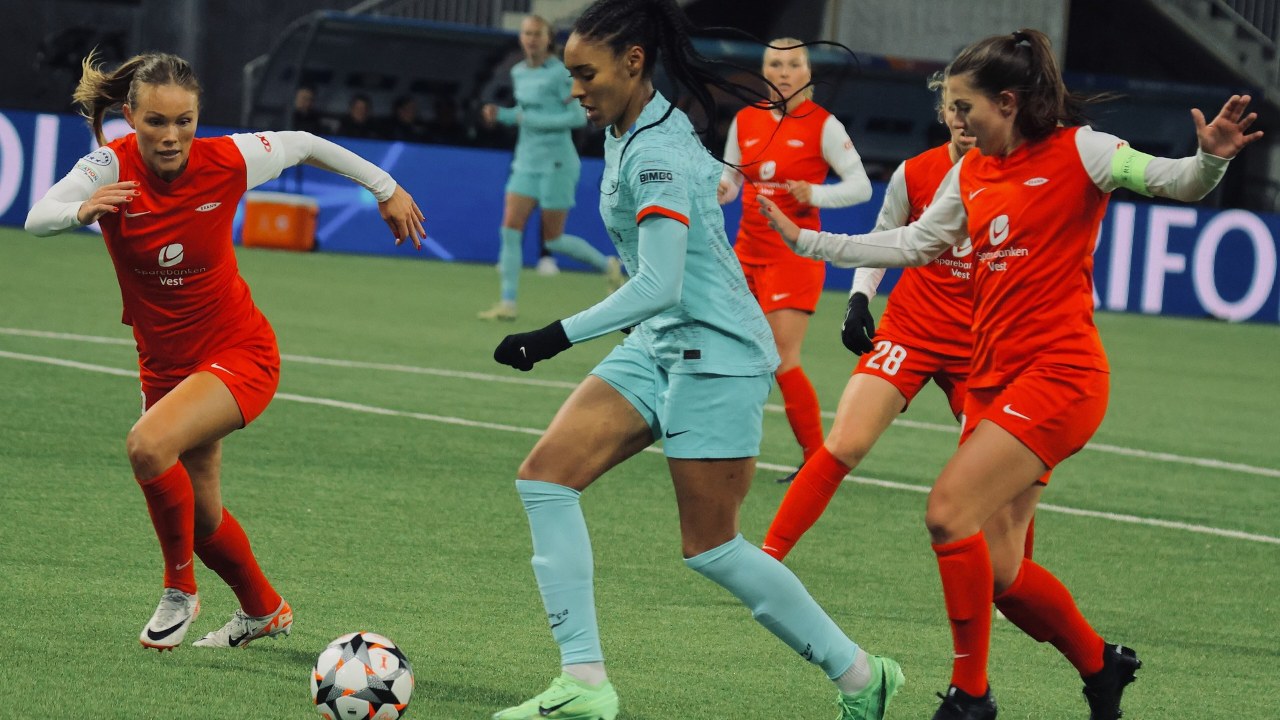
Women’s football has reached a point whereby its commercial and economic potential is becoming increasingly difficult to overlook. Over the last few years stadiums have welcomed more fans for women’s football than ever before, broadcast audiences are growing, and brands are capitalizing on the opportunities to engage with a new fanbase. That being said, temporary influxes in popularity (usually around world cups and European championships) and a slight increase in cultural relevance doesn’t equate to a financially sustainable product. The question facing the women’s game is no longer one of demand. It's now facing a broader query which is whether or not the ecosystem of the women’s game can endure consistent loss making over its ‘investment phase’ and come out the other end as an integrated part of the global football economy and culture.
The scale of the opportunity remains clear. The UEFA Women’s European Championship of 2025 attracted a record of 657,291 spectators across the tournament, that’s roughly a 14% increase in spectators from the previous Women’s European Championship in 2022. Meanwhile, Deloitte’s 2026 Women’s Football Money League saw the 15 highest-revenue women’s clubs from around the world generate €158 million during the 2024/25 season, a 35% increase from the previous year. These figures demonstrate two differing avenues of economic growth potential; a healthy market for in-person support, and the clubs are increasingly able to commercialise their audiences. However, neither attracting bigger crowds around tournaments nor increasing revenues guarantees that a product in its development phase will mature sustainably. A major international tournament can curate attention over a handful of weeks, whereas a domestic league must curate a supporter group which returns throughout the entirety of the season. Similarly, a commercial agreement secured this financial year does not necessarily translate into a recurring partnership. Women's football must capitalize on these surges of increased interest by curating a sustainable ecosystem for itself through wise allocations of investment while simultaneously integrating its own ecosystem into the broader football culture.
Social media has provided a platform for players and clubs to strengthen relationships with their fanbases, the introduction of women's players and clubs into EA SPORTS FC further increases the worldwide visibility of women’s football through a gaming environment. Modern outlets such as these can offer opportunities to reach younger supporters and audiences who may not have developed their football allegiances through the men's game. The objective should not be to assume that every new supporter will eventually become a consumer of men's football, but to create reasons for them to invest their time and money in women's football separately. There is an opportunity here to develop a distinct commercial proposition. Family-friendly matchday experiences, closer relationships between players and supporters, and a stronger connection to local communities could help women's clubs cultivate audiences whose expectations differ from those traditionally associated with men's football.
01 Investing in the Entire Ecosystem
A football club cannot become, and then remain, a sustainable business in isolation. Its prospects depend on the competition it participates in, the broadcasters distributing its matches, the sponsors funding its operations, the academies developing a pipeline of future players, and the governing bodies establishing the conditions in which it operates. Women's football must therefore be treated as a collection of clubs and leagues who are trying to grow simultaneously, rather than a bunch of disjointed entities whose goal is to grow at rates irrespective to their surrounding ecosystem.
Comparing the women’s game to a startup company provides a useful framework to understand the challenges ahead of its sustainable development. Each club is building a business, while the wider market around it is still taking shape. It needs a recognisable identity, reliable revenue, a loyal audience, and a product capable of capturing and sustaining interest from new consumers. Yet its success also depends on the existence of credible opponents, an attractive league, and methods of distribution which make the competition accessible. A club may invest successfully in its own squad and facilities, but struggle to realise the full value of that investment if its league lacks visibility or its commercial partners cannot reach a sufficiently large audience. The same logic applies beyond the clubs themselves. Broadcasters need compelling narratives and competition in order to guarantee themselves a return on their investment. Sponsors need meaningful opportunities to engage supporters and permeate the culture rather than simply attach their logos to a team. Academies need proper player development, coaches, facilities, and proven pathways into professional football, while governing bodies must ensure that the growth of elite competitions does not come at the expense of participation and development further down the pyramid.
Some leading organisations are demonstrating what is commercially possible, but the distance between them and their peers raises questions about how widely the benefits of growth are being distributed. For example, the three highest-revenue clubs in Deloitte’s 2026 ranking, Arsenal Women, Chelsea Women, and Barcelona Femení, generated 46% of the combined revenue reported by Deloitte in its 15-club ranking. Their average revenue was €24.3 million, compared with €7 million for the remaining 12 clubs.
There is no single solution. Sharing facilities and administrative resources can help reduce costs, while centralised league marketing and collective media-rights negotiations can give smaller clubs access to opportunities they would struggle to secure independently. Revenue-distribution mechanisms and investment in grassroots development can also help ensure that the foundations of the sport grow alongside its most visible teams. This doesn’t mean every club should follow an identical model. Some may benefit from the established infrastructure of a men's club; others may be better positioned to develop an independent identity and commercial strategy. The important consideration is whether each structure supports a long-term sustainable development of the women's team and the wider competition. The ecosystem must also recognise that different potential revenue streams operate on different timelines. A reliable academy pipeline will take years to pay itself off by producing first-team players, while a sponsor may evaluate a partnership based on its annual returns. A new stadium or training facility requires substantial upfront capital, while the resulting commercial benefits certainly won’t emerge until later. Sustainable development therefore requires coordination between investors seeking returns, clubs seeking sporting progress, and the governing bodies who are responsible for regulating investment and ensuring the sustainability of the wider game. If women's football is to become a sustainable and viable industry, success cannot be measured solely by the valuations or revenues of its biggest clubs. It must be measured by the strength of the competitions connecting them, the infrastructure supporting players, and the commercial opportunities available throughout the pyramid. The objective is not simply to create a handful of successful football businesses, but to develop a market and culture in which more of them have realistic chances of succeeding financially and on the sporting front.
02 The Media-Rights Bottleneck
Broadcasting has the potential to become one of women’s football’s most important sources of recurring revenue, but its development presents a difficult commercial problem. A league needs visibility through broadcasters to attract viewers, but broadcasters are more likely to pay substantial fees for competitions that already demonstrate consistent audiences and commercial value. Breaking this cycle requires a big investment from broadcasters to improve production, distribution, and to promote the competitions before the full financial return may be realised. The average broadcast revenue among the top 15 clubs in the Women’s Football Money League declined by 6% to €1.3 million in 2024/25. Broadcasting accounted for just 13% of their combined revenue, making it a much less lucrative source of revenue than it has proven to be for men’s football. A single season’s figures do not establish a permanent decline in broadcast value, nor do they mean the commercial model is failing. They do, however, demonstrate that fluctuating spikes in interest have not yet translated into a predictable broadcast audience and source of income across the top competitions. Women’s football could also benefit from making its competitions easier to discover, follow, and watch. Consistent scheduling, accessible distribution, and effective storytelling can help turn occasional viewers into regular audiences.
There is also a strategic question about how media rights should be sold. Top clubs may be able to negotiate more attractive deals for themselves, but a well-marketed league can offer broadcasters a more substantial and predictable product. Collective rights strategies may also help smaller clubs benefit from the growing value of the competition as a whole. The objective should not be to maximise broadcast fees at any cost. Exclusive arrangements that restrict access too aggressively could undermine audience development, while rights sold too cheaply could limit future income. Women’s football needs a distribution strategy that balances immediate accessibility with the long-term commercial value of its competitions.
03 The importance of investors who see beyond the ‘startup’ phase.
Investors are helping determine what women’s football will become, and their investment strategies are equally as important as the money they are pumping in. The most consequential investors are those who improve the underlying product, strengthen commercial operations, and create conditions in which clubs can become more resilient over time.
Michele Kang offers one of the clearest examples. Through Kynisca, the global multi-club organisation she founded, Kang has connected the Washington Spirit, OL Lyonnes, and London City Lionesses under a dedicated women’s football investment structure. Kynisca describes its ambition as building a new model for the game through long-term investment, professional infrastructure, and high standards of performance. Its guiding phrase, “Globally connected. Locally rooted. Built for long-term success.”, captures the balance between shared expertise and the individual identity of each club. The potential advantage of this model is that knowledge and resources can move between organisations without requiring every club to develop its capabilities independently. Its effectiveness, however, must ultimately be judged by the results: improved facilities, stronger revenues, competitive progress, and reduced dependence on external funding. Mercury13 represents another approach. This investment group has expanded its portfolio through women’s clubs including Como Women, Bristol City Women, and FC Badalona Women. Its multi-club structure creates opportunities to share commercial expertise, develop partnerships across markets and build a portfolio dedicated to women’s football. Juan Mata’s (Men’s football legend) involvement as an investor in Mercury13 also illustrates how people with experience of the professional game can contribute networks and expertise alongside capital. Yet such a strategy also carries risks: the value of shared resources depends on effective execution, and a common owner does not automatically guarantee that every club will become sustainable.
Manchester City demonstrates a different route. Rather than relying on a women’s-only investment platform, the club has integrated its women’s team into the wider City Football Academy while investing in facilities designed specifically for the players. In 2026, Manchester City opened a dedicated first-team facility representing an investment of £10 million, with specialist medical, recovery, gym, and performance spaces. The project illustrates how an established football organisation can use its wider resources to develop a more professional environment for its women’s team.
These models should not be treated as competing templates with one inevitable winner. Each addresses a different problem: Kynisca seeks to coordinate women’s football expertise across clubs; Mercury13 aims to build a portfolio of women’s teams; Manchester City uses the resources of an established football organisation to strengthen a dedicated women’s operation.
The lesson for future investors is not that women’s football offers guaranteed returns. It is that the opportunity extends beyond buying a club and hoping its value rises. Capital can create lasting value when it develops the facilities, people, distribution and commercial capabilities that allow the sport to grow.
04 The contrarian angle: what will a ‘successful’ development phase really look like?
Women’s football faces a question that goes beyond how quickly it can scale up its revenue. Should success mean reaching the financial scale of men’s football, or developing a commercially sustainable sport with its own audience, identity, and economic model? The two ambitions are not mutually exclusive, but they are not identical. If success is measured only through revenue, clubs may be encouraged to pursue expansion before the surrounding ecosystem is ready to support them. If it is measured only through cultural visibility, the industry risks celebrating momentary attention that never translates into sustainable income nor integration into the wider culture. The more meaningful benchmark is whether women’s football can convert its growing audience into lasting value: professional opportunities for players, resilient clubs, competitive leagues, and commercial relationships that survive beyond individual investors or tournament cycles. The real achievement will not simply be that women’s football becomes more popular (although that doesn’t hurt), but that it becomes a sustainable product which benefits everyone involved in it for generations to come.
Crowds at the Women’s EURO have almost tripled in eight years, but broadcasting still brings in only 13% of top clubs’ revenue, and three clubs earn almost half the money. So the question is whether the next phase of investment spreads that growth across leagues, broadcasting and the wider pyramid, or keeps concentrating it in a handful of clubs backed by their owners.