Only City is in the dock. The whole game shared the growth.
Manchester City have been found guilty, by an independent commission, of 114 charges related to serious breaches of the Premier League's financial rules and inflating the club revenues by more than £900 million over a nine-season period; but who else benefited from the Abu Dhabi United Group's (ADUG) injection of money?
 Written by Marcus Puhalj
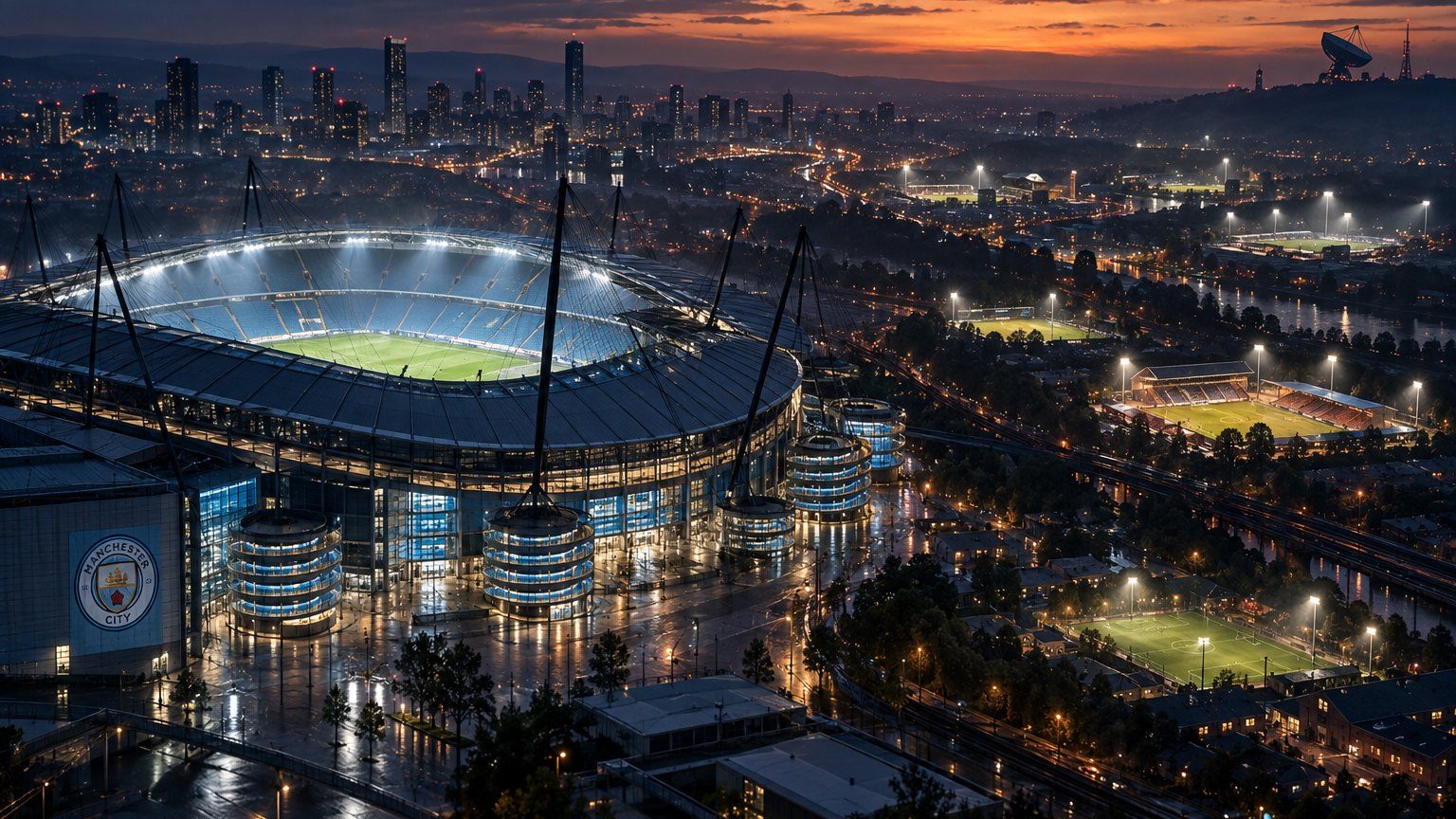
01 The verdict
On the 25th of September the verdict had been leaked to the public that an independent Commission found Manchester City guilty of 114 charges related to serious breaches of the Premier League's financial rules and regulations between seasons 2009/10 and 2017/18:
"The independent Commission found that Manchester City arranged 'sham' commercial deals with a number of its sponsors during the period, which were part of a disguised funding scheme, whereby those companies were only required to pay a portion of the relevant sponsorship fees. The remainder was funded by Abu Dhabi United Group Investment & Development Ltd (ADUG), which owned the club. As part of the scheme, further 'sham' arrangements, funded by ADUG, were entered into to enable the club to record lower operating expenses than it actually incurred, as well as a 'sham' circular arrangement with Fordham, an entity that purchased the club's players' image rights, that was funded by ADUG." — Premier League statement
The alleged goal of these schemes was to inflate the club's revenues and reduce its costs, thus resulting in the club benefiting from more than £900 million in inflated revenues over the nine-season period. Manchester City have since appealed the decision of the independent Commission and the independent Appeal Board hearing will remain confidential until release of the outcome is permitted.
Over these nine seasons ADUG constructed the foundations upon which they were able to go from being a slightly above average English club to one of the powerhouses of European football. And the verdict has made it quite clear that the primary beneficiaries of the ADUG's 'financial doping' have been Manchester City FC.
That being said, the second hand beneficiaries of the ADUG's wealth and power, including; the city of Manchester, the Premier League, the EFL, and the UK have been largely disregarded from the public discourse in the midst of this groundbreaking story, but the growth of these respective entities following the ADUG's arrival in the Northwest of England should not remain overlooked.
02 Life before and after the ADUG takeover of Manchester City FC
The five seasons leading up to the 2008 ADUG takeover of Manchester City happened to correspond with the roaring macro-economic boom that preceded the 2008 financial crash. International markets surged, globalization expanded rapidly, and assets appreciated at unprecedented rates during these years. Naturally, this influx of capital spilled into the sports economy and as a consequence; European Football was growing.
Within the economy of European Football the traditional "Big Five" domestic leagues were riding a consistently upward green arrow. However, throughout this period the English top flight experienced a rate of total revenue growth and broadcast revenue growth lower than the combined rates of growth of Germany, Spain, Italy, and France.
Fortuitously, Manchester City happened to become a 'major club' (by result of their new ownership) at the exact historical junction marked by the subprime crisis which triggered the global economic collapse in 2008. Many questioned whether the football bubble would pop but the industry remained relatively insulated, as Deloitte predicted, due to the unique loyalty-driven nature of the football industry. Major clubs had managed to avoid severe economic downturns, and thanks to their new owners, Manchester City certainly came out the other end unscathed unlike other English clubs of comparable size and stature (example: Leeds United).
Since their very first year in the league, the geopolitical and financial might of Manchester City's new owners extended far beyond the club and was already felt around east Manchester.
Furthermore, in October and November of 2008, Sheikh Mansour bin Zayed Al Nahyan (Leader of ADUG), provided an estimated £3.5 billion in emergency capital to Barclays which helped the bank avoid a state-funded taxpayer bailout following the financial crash. Had this huge amount of money been coughed up to Barclays by Sheikh Mansour bin Zayed Al Nahyan had he not taken over a majority owner of Manchester City two months prior…who knows. At the time, Barclays was famously the primary title sponsor of the English top flight-as it was the "Barclays Premier League" from 2001/02 until the end of the 2015/16 season.
The potential influence outside of Manchester City that the ADUG had on the league at this time immediately following its arrival in the league can not be overlooked. They propped up the league's primary financial backer and sponsor (Barclays) in face of a financial crisis and it simultaneously created a new European superpower in Manchester City FC.
Even more impressive, in the first six seasons (2008/09-2013/14) following the takeover and the financial crash, the Premier League's rate of revenue growth was meteoric in comparison to the other "Big Five" domestic leagues. The Barclays Premier League rate of total revenue growth (67.58%) was more than double that of the remaining "Big Five" combined (31.81%) while its rate of broadcast revenue growth (85.54%) was three times greater than that of the remaining "Big Five" combined (26.92%).
While most of the big domestic competitors relied on different forces to navigate the post-crash market (example: the Spanish government had to directly prop up their own league financially in order to continue operating at homeostasis). Meanwhile, the English boat was propelled to new heights by a heavy-duty, foreign state-backed engine.
With hindsight, it is not out of the question to suggest that the ADUG's introduction to English Football is one of the main reasons the Premier League has been the richest, most powerful, and most widely consumed league around the world for the last 15-20 years.
03 How the rest of the English football ecosystem has continued to benefit from Manchester City's financial doping
Analyzing this dynamic requires the critical caveat that correlation does not necessarily equal causation. That being said, if we observe the English football pyramid through the metaphor of an 'ecosystem', whereby all of its parts are in one way or another dependent upon one another, reveals that when a prominent entity flourishes, it naturally elevates the financial prosperity of its surroundings. In the modern sporting landscape, global prominence is largely quantified by monetary growth, a reality reflected across the entire domestic structure.
Manchester City's evolution into a global powerhouse from 2008 onward acted as a major catalyst for the financial explosion of the Premier League. The introduction of this heavily funded competitor certainly contributed to an unprecedented rate of spending and investments on and off the pitch that would suggest rival clubs had to dramatically scale up their own investments to remain competitive. The unprecedented level of sporting and commercial investments significantly amplified the overall attractiveness of the Premier League as a premium entertainment product.
This transformation occurred alongside, and potentially contributed to, the era in which English football became the world's dominant commercial sports league. Examining the timeline from 2008 to 2026 exposes an undeniable correlation between Manchester City's soaring fortunes and the league's aggregate financial metrics. While Manchester City's annual revenues surged toward the upper echelons of global sport (justifiably or not), the Premier League's collective broadcast rights similarly soared to meteoric valuations.
In the 2022–2025 cycle, international broadcast rights alone escalated to £5.3 billion, surpassing domestic rights for the first time in history. For the 2025–2029 cycle, England's top flight cemented its supremacy by securing a record-breaking £6.7 billion domestic television rights package. This massive expansion in global commercial sponsorships and media fees directly inflated the aggregate revenues of all member clubs, who pulled in billions in central payments.
As a result of these increases the English Football League (EFL) and the wider football pyramid in England, fortunately, became second-hand beneficiaries of this elite commercial strength. Like many other football pyramids around the world, when the top tier generates such substantial international wealth it redistributes a dedicated percentage down the pyramid through an established trickle-down mechanism. Under solidarity frameworks and academy funding systems, the Premier League committed more than £550 million per year to the wider game, lower leagues, and grassroots communities. Furthermore, top-flight clubs maintain a long-term funding commitment to inject a record £1.6 billion every three years into these lower tiers.
This continuous redistribution funding underpins the basic survival, infrastructure development, and the academy operations of clubs across the Championship, League One, and League Two. Because central revenues are distributed collectively, a tangible percentage of the money flowing to the 72 EFL clubs is fundamentally generated by the high-value commercial ecosystem that Manchester City's competitive rise objectively helped construct.
04 Manchesterism and the future of UK and UAE relations
The evolution of the United Arab Emirates' footprint in English football has transcended sport, becoming an intricate component of British domestic politics and international diplomacy. At the heart of this intersection is the governing philosophy of "Manchesterism". Originating from the political trajectory of Andy Burnham, who recently transitioned from a decades reign as Mayor of Greater Manchester to becoming the Prime Minister of the United Kingdom and Leader of the Labour Party in July 2026, the agenda centers on driving national civic and economic regeneration by actively collaborating with private global capital.
During his mayoral tenure the local authorities maintained extensive links with Abu Dhabi-backed entities, selling swathes of land to the Abu Dhabi United Group (ADUG, the same group which owns Manchester City FC) who completely reinvigorated the area of East Manchester and flipped the community on its head into a largely prosperous community.
However, before this philosophy has gotten its chance to be deployed at a national level by Andy Burnham, it's facing a severe trial following the independent commission's initial verdict finding Manchester City and the ADUG guilty of serious financial breaches.
Following the club's formal appeal on 1 October 2026, a new three-person Appeal Board under the Judicial Panel will review the case. If the appeal fails, the outcomes are likely to be extremely damaging for the ADUG. Beyond the possibility of unprecedented points deductions or relegations, top-tier leadership (such as chairman Khaldoon Al Mubarak and UAE Vice-President Sheikh Mansour) could be condemned as unfit to continue at Manchester City as they will likely face the newly established Independent Football Regulator's "fit and proper persons" test.
The potential loss of relations with these powers would create a profound diplomatic friction that wouldn't necessarily favour the United Kingdom nor the United Arab Emirates (UAE). Ever since Brexit, the UAE has remained an indispensable financial partner for the United Kingdom, anchor-funding major infrastructure and recently securing a landmark free trade agreement with the Gulf Cooperation Council.
In retaliation for the initial verdict, it has been reported that Emirati investors are considering to pull billions of pounds out of planned UK investments, specifically targeting a prominent hi-tech hub between Oxford and Cambridge.
Prime Minister Burnham is being forced to take on a precarious balancing act as he will want to maintain the integrity of independent domestic regulatory institutions while ensuring the vital post-Brexit foreign investments from a key global ally won't go dry.
05 The contrarian read
The public debate has cast this case as a story with one beneficiary and many victims: City broke the rules, and its rivals lost titles, Champions League places and prize money. Our own recount priced those losses at £3.9m for the titles, about €177m in Champions League access and £188m in league merit money spread across 35 clubs.
The figures in this piece point to a beneficiary that is not in the dock. The Premier League is the body prosecuting City for the money ADUG put in. Yet in the six seasons after the takeover, the league's broadcast revenue grew 85.54 per cent, more than three times the rate of the other big leagues combined, and its domestic rights now sell for a record £6.7bn. Every club now counting what it lost to City was paid its share of that growth. As this piece cautions, correlation is not causation. But the league cannot easily argue that ADUG's money damaged the competition while keeping the growth that money helped create.
The Premier League is both the prosecutor of ADUG's money and one of its largest beneficiaries.
The question for the Premier League is how far it can push sanctions against City without arguing against its own growth story. The Appeal Board's ruling will show whether the league punishes the money itself, or only the way it was accounted for.